
20-Day Everest Three Passes Trekking Package
- Nepal See on map
-
Duration 19 Nights/20 Days
-
Difficulty Moderate
-
Region EVEREST REGION
-
Activity Nepal Trekking
-
Max. Altitude 5545m
-
Best Season Mar-Jun, Sep-Nov
-
Start/End Point Kathmandu
-
Group Size 1-12 People
Overview of the Everest Three Passes Trek
The Everest Three Passes Trek is the ultimate alpine challenge of Nepal’s Khumbu region. It is often considered one of the most unique and adventurous challenges in all of the Himalayas. This trek offers an unforgettable loop that steers out of the crowds. The Everest Three Passes Trek is designed for experienced trekkers and is a rigorous experience of 20 days. In this trek, we will conquer the three high passes: Kongma La Pass(5535m), Cho La Pass(5420m), and Renjo La Pass(5360m). Along the way, we will stand at the historic Everest Base Camp and Kala Patthar. We will also be rewarded with the scintillating panorama from Gokyo Ri and Gokyo Lakes.
Our journey will seamlessly blend jaw-dropping panoramas of four 8000m peaks with deep cultural immersion into the Sherpa culture. We will explore Namche Bazaar, Tengboche Monastery, and Thame Village up close to enjoy the most beautiful views in the Himalayas. This will be one of the lifetime experiences in Nepal.
Adventure Himalaya Nepal will provide you with a fully inclusive and hassle-free service package to ensure you maximum safety and comfort throughout the Everest Three Passes Trek. This comprehensive coverage will begin the moment you land in Nepal to the end of the trek. Our services feature airport transfers and premium hotel accommodations in Kathmandu and throughout the trail. You will also be supported by the experienced, government-licensed, and English-speaking guides who are equipped with pulse oximeters and satellite communications.
Join us today for one of the most exciting and demanding trekking experiences in Nepal. With Adventure Himalaya, your journey will be swift and seamless.
Everest Three Passes Trek Cost
Everest Three Passes Trek Cost depends on the size of your group. We offer competitive group rates while maintaining quality accommodation, experienced trekking guides, necessary permits, transportation, and other essential trekking services.
Starting from USD 1,800 per person for groups of 9–12 people.
Private and customized departures are also available. Contact Adventure Himalaya Nepal for a personalized quotation based on your preferred dates, group size, and accommodation requirements.
Everest Three Passes Trek – Cost Per Person
| Group Size | Price Per Person |
|---|---|
| 1 Person | USD 2,200 |
| 2 People | USD 1,950 |
| 3–8 People | USD 1,850 |
| 9–12 People | USD 1,800 |
What are the Major Highlights of the Everest Three Passes Trek?
- We will conquer Three High Mountain Passes for the ultimate high-altitude loop, one of the most adventurous journeys in the Himalayas.
- We will stand at the Everest Base Camp alongside the massive Khumbu Glacier.
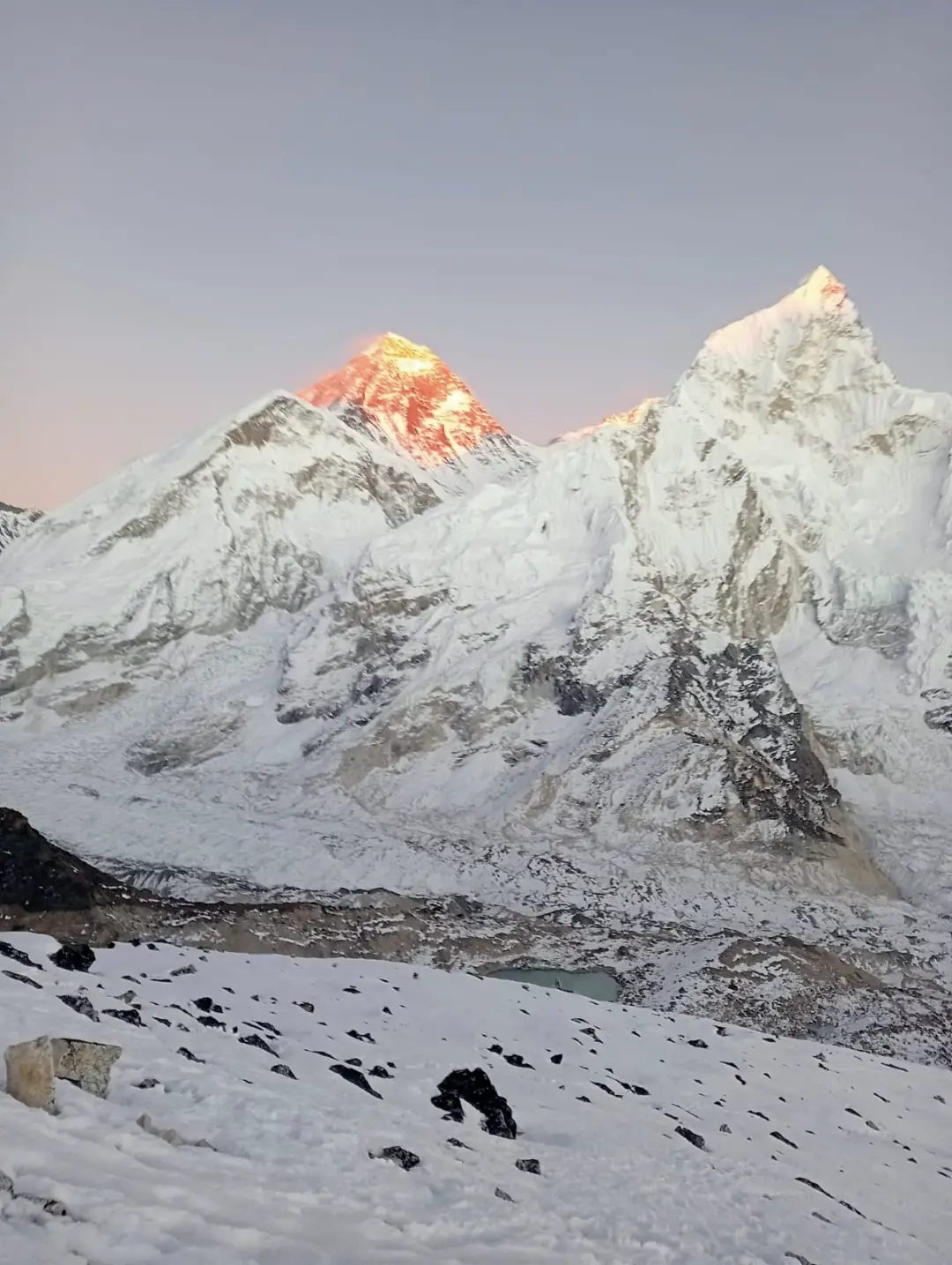
- We will reach the iconic vantage point of Kala Patthar to witness pristine views of the rising sun over Mt. Everest, Nuptse, and Pumori.
- We will get to explore the striking series of six turquoise lakes of Gokyo alongside the picture-perfect view from Gokyo Ri.
- We will have deep immersion in the Sherpa culture as we will explore historic hubs like Namche Bazaar, Tengboche, and Thame.
- We will be witnessing several 8000m peaks in two different panoramas of Kala Patthar and Gokyo Ri.
- We will visit the traditional and spiritual serenity of Tengboche Monastery, which showcases the sacred culture against the terrific backdrop of Ama Dablam.
- We will have the thrilling experience of the Lukla flight, one of the most adventurous experiences in Nepal.
Why Choose Everest Three Passes Trek
Everest Three Passes Trek is an ultimate step off from the standard Everest trail and conquer the most adventurous and ultimate Himalayan loop achievement. It is one of the most definitive and grandest challenges for wilderness purists. This trek is perfect for those who seek combined raw high-altitude adventure along with the alpine beauty of the Himalayas.
- We will conquer the three high passes that test our limits and reward us with unmatched mountaineering achievements.
- We will be steered away from the congested and crowded classic Everest route to the quiet and pristine trails of authentic wilderness.
- We will get unrivaled panoramic viewpoints and stand on Gokyo Ri and Kala Patthar to enjoy the finest look at the Himalayas.
- We will complete the perfect circuit of Khumbu as we will complete a grand circle through the historic Sherpa Valleys.
Travelling with Adventure Himalaya Nepal
Adventure Himalaya Nepal Pvt Ltd. will ensure your journey to Nepal is backed by the exceptional service standards and local expertise. We are a premier, government-registered travel partner based in Thamel, and we specialize in conducting safe and trusted services all over Nepal.
Not just trekking, we provide services such as tours, mountain flights, city guides, and many more. We handle all the demanding logistics to make your first-hand experience better and sweeter. With Adventure Himalaya Pvt. Ltd, you can have a great experience visiting Nepal. Because visiting Nepal just once is not enough.
What are the Major Attractions of Everest Three Passes Trek?
The Three Iconic High Passes
We will conquer the legendary trio of Kongma La (5535 m), Cho La (5420 m), and Renjo La (5360 m). This experience is the ultimate test for adventure seekers. This challenging high-pass trekking will connect us with the valleys of the Khumbu region via rugged glacial moraines and steep fields. Crossing these high-altitude landmarks will reward us with the perfect panorama of Khumbu peaks like Mt. Everest, Lhotse, Makalu, Ama Dablam, and many more. Crossing these passes will be one of the once-in-a-lifetime experiences.
Everest Base Camp & Kala Patthar
Everest Base Camp (5364m) will allow us to walk directly alongside the tumbling ice towers of the Khumbu Icefall. We will be rewarded with the experience of elite global mountaineering expeditions scenes in the spring season. Everest Base Camp is considered the pinnacle of trekking. This adventure will peak with the pre-dawn hike up to the summit of Kala Patthar(5545m). This iconic viewpoint will provide us with the finest and closest-up view of a golden sunrise that illuminates the massive peak of Mt. Everest.
The Turquoise Gokyo Lakes
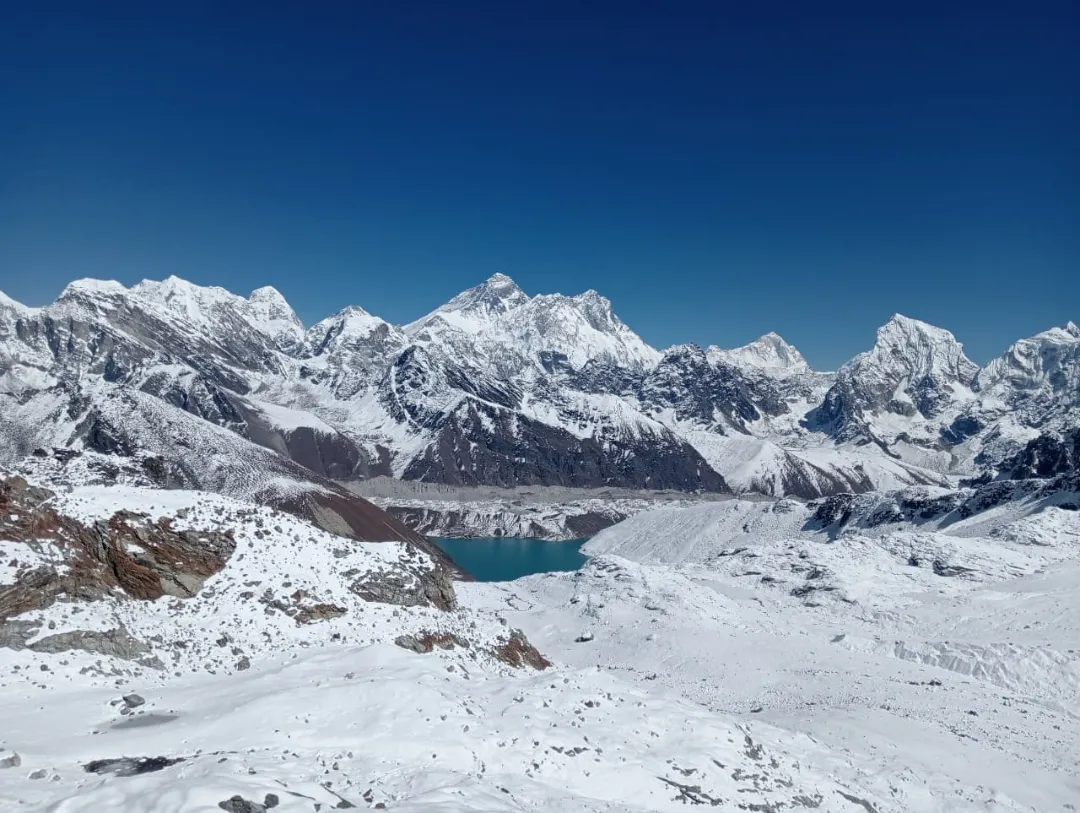
The pristine Gokyo Valley reveals a mesmerizing system of six high-altitude freshwater lakes. These lakes are the highest freshwater lake systems in the world. The striking, deep turquoise colours of these sacred lakes will create a brilliant visual contrast against the surrounding snow-capped giants. We will trek past this sanctuary while the Ngozumpa Glacier will add a dramatic and raw backdrop of shifting ice. Ngozumpa Glacier is also the longest glacier in the Himalayas.
Gokyo Ri Panoramic Summit
Gokyo Ri at 5357m delivers the steep switchbacks of the Himalayas. Seasoned trekkers debate that Gokyo Ri offers more dramatic views of the Himalayas than Kala Patthar. The high-altitude summit unveils the staggering theater of ice and rock that captures the four 8000-meter peaks, Everest, Lhotse, Makalu, and Cho Oyu simultaneously. Looking straight down from the top gives you a bird’s-eye view of the shimmering lakes and the massive, sprawling expanse of the glacier below.
Sherpa Culture & Tengboche Monastery
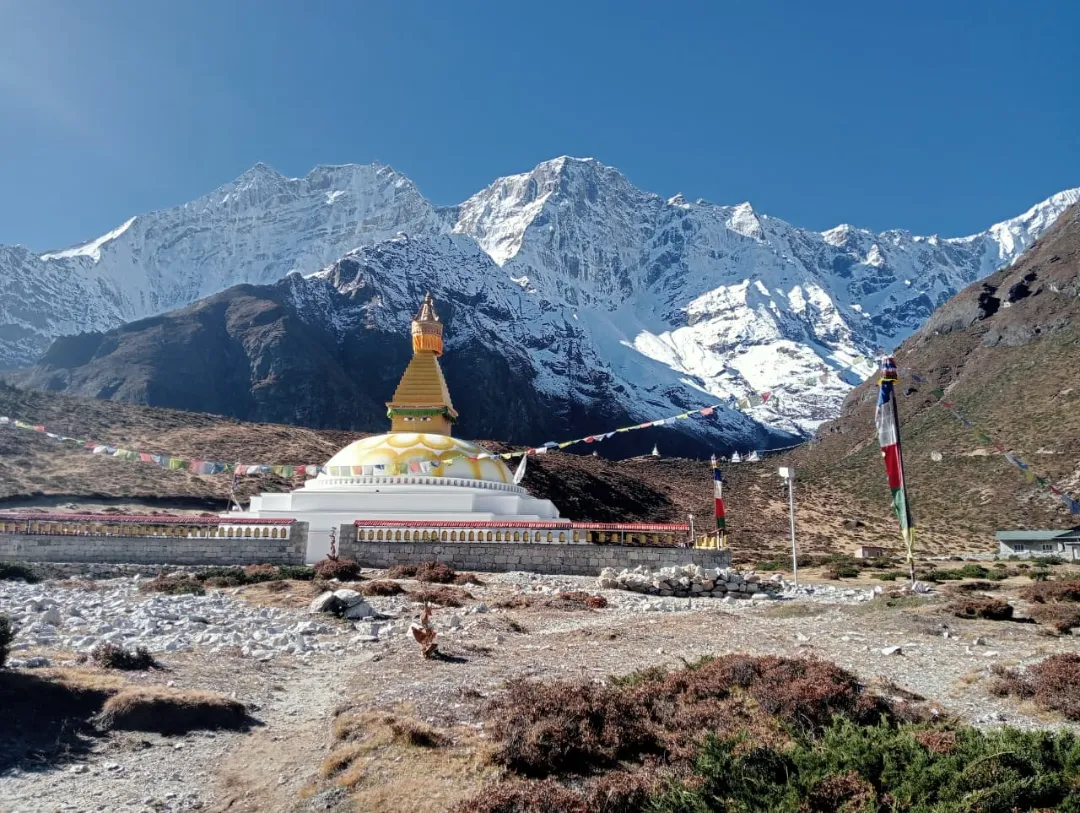
This trek provides an immersive look into traditional Sherpa culture as you journey through historic mountain hubs like Namche Bazaar and Thame Village, the birthplace of legendary Everest summiteers. Along the trail, you will discover ancient mani walls, prayer wheels, and the sacred Tengboche Monastery. Nestled right below the vertical face of Ama Dablam, this spiritual center invites you to sit with chanting monks during their evening Buddhist prayers.
Detailed Itinerary
Welcome to Nepal. After you arrive at Tribhuvan International Airport, our highly anticipated Everest Three Passes Trek begins. Overnight in a Hotel.
Today is dedicated to exploring the cultural heart of Kathmandu while making final preparations for your Everest Three Passes adventure.
After breakfast, you will visit some of Kathmandu Valley’s most important UNESCO World Heritage Sites, offering an excellent introduction to Nepal’s rich history, spirituality, architecture, and traditions.
Your sightseeing can include Swayambhunath (Monkey Temple), located on a hilltop overlooking Kathmandu Valley. The ancient Buddhist stupa, prayer flags, monasteries, and panoramic views provide a fascinating introduction to Nepalese Buddhist culture.
You will then visit Pashupatinath Temple, one of the most sacred Hindu temples dedicated to Lord Shiva. Although non-Hindus cannot enter the main temple, you can explore the surrounding ghats, shrines, and riverside area and observe the important religious traditions taking place here.
The tour continues to Boudhanath Stupa, one of the largest Buddhist stupas in Nepal and an important center of Tibetan Buddhism. You can walk around the stupa with pilgrims and monks, observe the colorful prayer flags and prayer wheels, and explore the surrounding Tibetan Buddhist monasteries.
Depending on your sightseeing schedule and flight arrangements, you may also visit Kathmandu Durbar Square, famous for its historic palaces, temples, courtyards, and traditional Newari architecture.
In the afternoon, you will return to the hotel and have a trek preparation and briefing session with your trekking guide. The guide will check your trekking equipment, help you organize your backpack, explain the route and altitude profile, and provide important information about altitude acclimatization, weather, meals, accommodation, safety, and the three high passes Renjo La, Cho La, and Kongma La.
This is also the ideal time to purchase or rent any remaining trekking equipment in Thamel. Your guide will help you identify anything you may have forgotten or need for the challenging high-altitude sections of the trek.
The evening is free to relax and enjoy a welcome dinner before your early departure toward the Everest region the following morning.
We will board a thrilling short Takeoff and Landing mountain flight to Tenzing-Hillary Airport in Lukla. If the flights are barred from taking off from Kathmandu, we will begin with the midnight drive to Manthali. After landing, we will organize our team of licensed guides and porters and enjoy a quick breakfast. We will meet with the team and head towards our first walking trail of the Everest Three Passes Trek. We will descend gently through the pine forests along the Himalayan suspension bridges to Phakding village. Overnight will be in Phakding teahouse.
Today, we will hit the trail early. We will cross multiple suspension bridges wrapped in prayer flags. We will enter Sagarmatha National Park boundary at Monjo. Our guide will clear our digital tracking permits. The trail will sneak along the riverbed of the Dudhkoshi River. We will tackle the infamous switchbacks up to Namche Bazaar, where we will be offered our first views of Mt. Everest. Namche Bazaar will provide us with a beautiful amphitheater and a bustling meeting point for the Himalayan trekkers. We will stay in a teahouse overnight.
We will spend a proper high-altitude acclimatization day in Namche Bazaar today. We will have an active day with the hike up to Hotel Everest View(3880m). Hotel Everest View is the highest luxury hotel in the world and will treat us with the sweeping panoramas of Mt. Everest, Lhotse, and the striking peak of Ama Dablam. We will head back to Namche by lunch. We will spend the rest of our day exploring cafes, the local Sherpa Museum to absorb the history of early Everest expeditions, and relaxing. Overnight in a teahouse.
Our trail today will track high along the mountain walls. We will be rewarded with the jaw-dropping visuals of the Khumbu Valley. We will descend deep into the forest to cross Imja Khola and begin our ascent through rhododendron groves to reach the ridge top of Tengboche. Tengboche is a delightful village that serves as the home of the Tengboche Monastery, which is the spiritual capital of the Khumbu region. We will step inside the monastery to witness the chants and prayers alongside the magnificent backdrop of Ama Dablam. Overnight in a teahouse.
We will start our morning early and descend through the moss-covered forests to Debuche. We will be crossing a roaring suspension bridge over the Imja Khola. The route. The route today will climb the north face of Ama Dablam and the stone walls of Pangboche Village. As we cross the 4000-meter mark, the lush trees will give way to a dark and alpine landscape dominated by low shrubs and dry soils. We will stay in a teahouse in Dingboche.
In the standard Everest Base Camp trek, Dingboche would be an ideal acclimatization spot. But we will trek further towards Chhukung. We will have a more relaxed trekking day to prevent acute mountain sickness. The path will climb gradually through vast alpine yak pastures that are framed by the towering south face of Lhotse and sharp ridges of Nuptse. We will arrive at the remote teahouse village of Chhukung by lunchtime and adjust ourselves to the thinning air. Overnight in a teahouse.
We will take a most important acclimatization day to prepare our bodies for the grueling high pass crossing tomorrow. We will spend a free day and an optional hike up to Chhukung Ri. Chhukung Ri is a high viewpoint which stands higher than Kala Patthar. If that is not possible, you can choose to walk upwards and downwards along the Chhukung village. We will take a carb-heavy meal and rest up, hydrating throughout the day as we prepare for the massive day ahead.
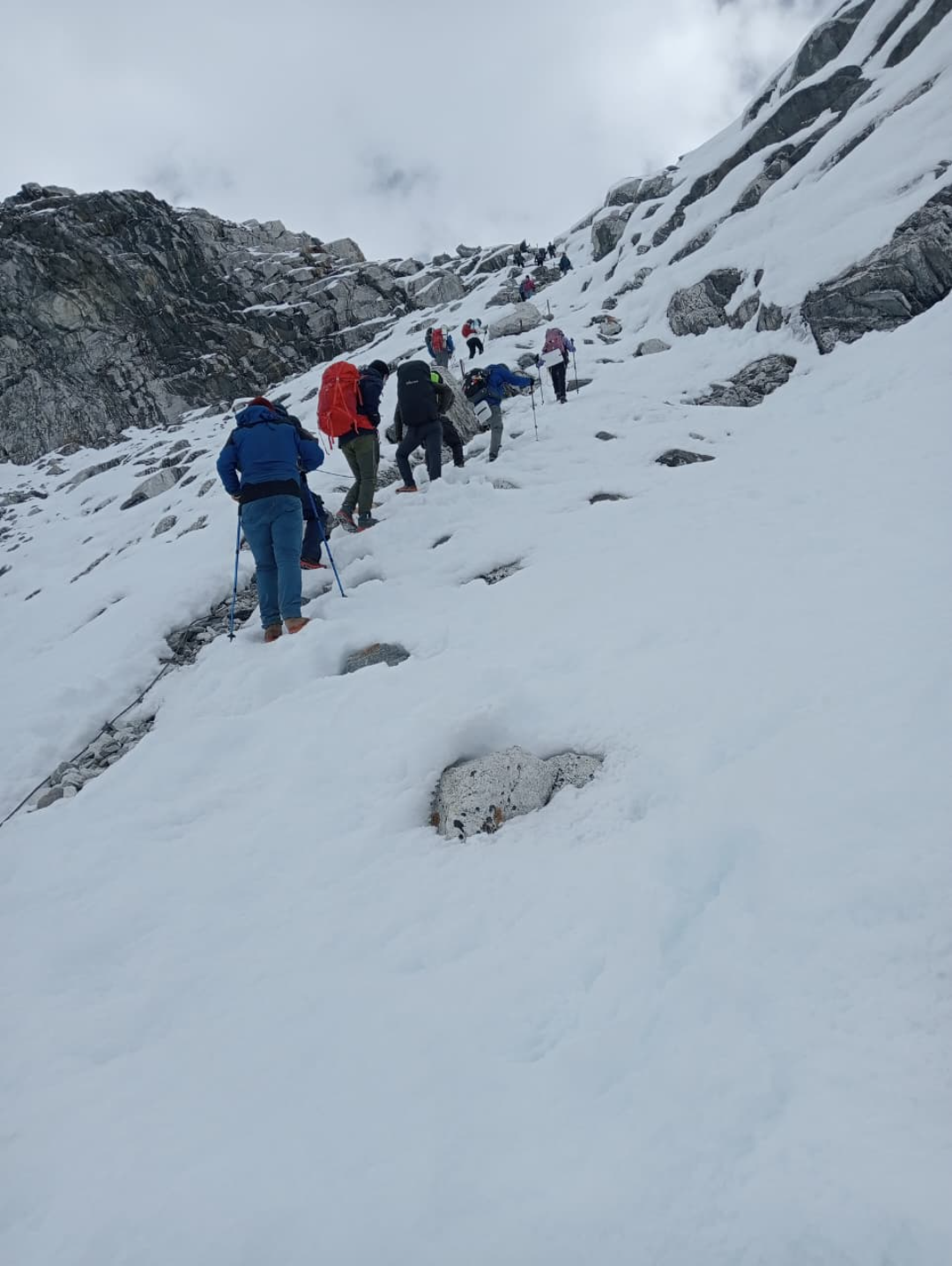
Today, it will be the most demanding milestone of our Everest Three Passes trek. We will rise before dawn to tackle the first of three major passes, Kongma La Pass. This is the highest and most isolated of the three crossings. We will reach up to 5535m, which is almost the altitude of Kala Patthar. We will be rewarded with the unmatched views of Khumbu Glacier and Makalu. We will get down to intersect with the classic Everest Base Camp trail at Lobuche. Overnight in a teahouse.
Another big day awaits. We will follow the rocky lateral moraine of the Khumbu Glacier on a steady and gradual climb up to Gorak Shep. Gorak Shep is the final permanent settlement before Everest Base Camp. After a quick lunch and drop-off of our heavy gear. We will push forward to Everest Base Camp(5364m). The path will hover over unpredictable glacier waves and finally reach Everest Base Camp. We will celebrate the Everest Triumph moment with our fellow trekkers and spend quality moments. We will then get back to Gorak Shep for the night.
We will beat the sun with a freezing and pre-dawn push up the steep slopes of Kala Patthar. This is the ultimate vantage of our Everest Three Passes Trek. We will capture the first golden rays of sunrise hitting the summit of Mt. Everest, Nuptse and Pumori. We will capture the brilliant moments and descend back to Gorakshep. We will head west towards Dzongla after brunch. The trail will break away from the crowd and trace a scenic path. Overnight in a teahouse of Dzongla.
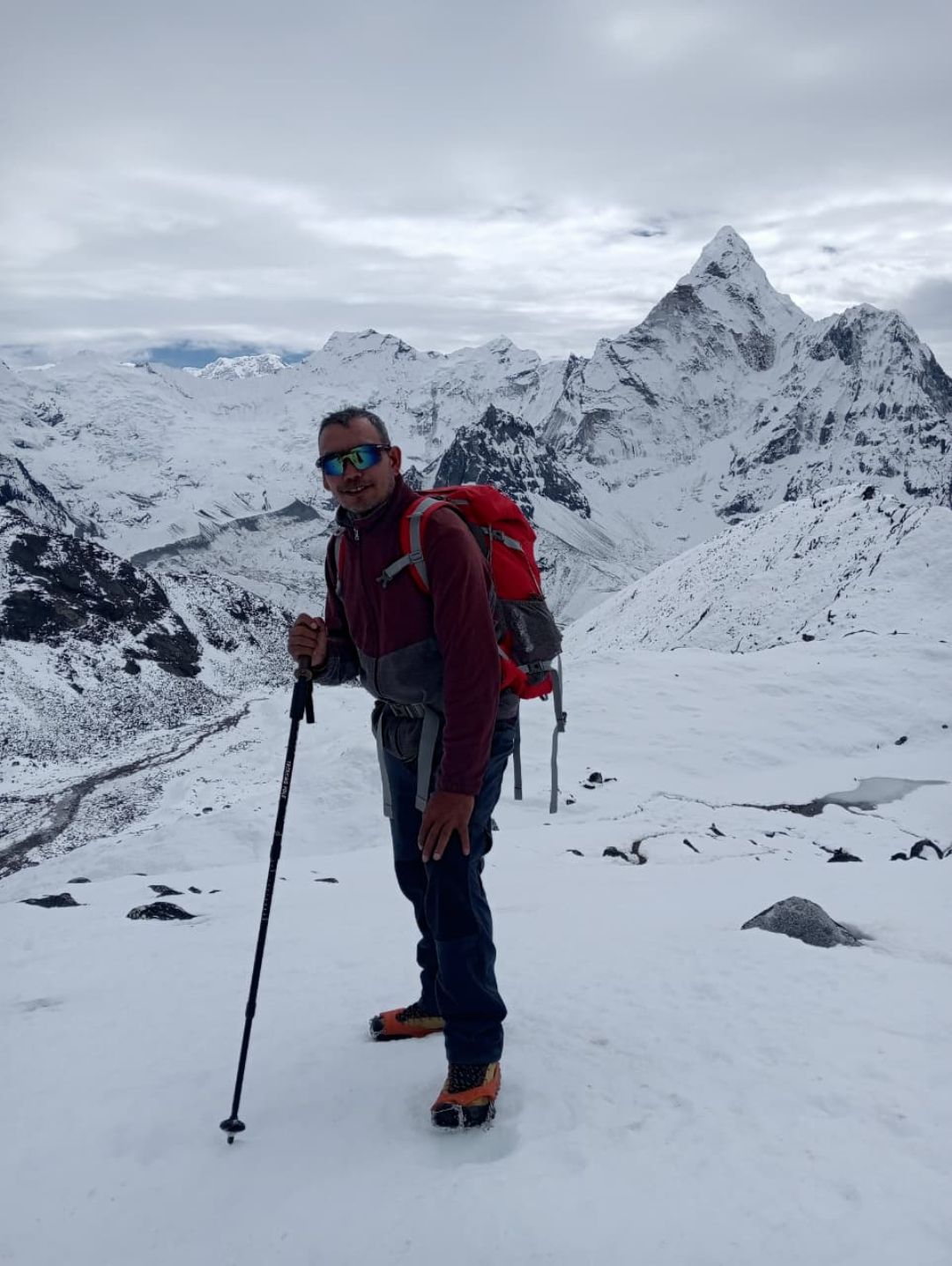
We will have another epic day as we will be crossing our second pass. Cho La Pass(5420m) will involve crossing a steep boulder field followed by a steady hike across the flat glacial ice sheet. The microspikes are highly recommended for this section. We will be offered exceptional views of Ama Dablam and Baruntse. A technical descent down to a steep rock gully will bring us safely into a Thangnak valley. Overnight in Thangnak.
We will enjoy a much easier morning today. We will navigate across the massive ice ridges of Ngozumpa Glacier. Ngozumpa Glacier is the longest glacier in the entire Himalayas. The trail will wind over rugged moraine hills until we drop down into the Gokyo Valley. We will be rewarded with the deep turquoise colours of Gokyo Lakes. We will settle into our teahouse early before lunch and enjoy the view throughout the day in this incredible scenery.
Today, we will head out early in the morning in the dark to climb the steep and grassy switchbacks of Gokyo Ri. Many travellers claim that Gokyo Ri offers the finest view of the entire Everest region, even better than Kala Patthar. We will be rewarded with views of Everest, Lhotse, Makalu and Cho Oyu. We will have a pristine view of the Gokyo Lakes below our eyes. We will return down to Gokyo Village and spend the rest of the day relaxing by the lake. Overnight in a teahouse.
We will cross our third and final barrier: the stunning Renjo La Pass (5360 m). The climb climbs steadily along the rim of the lake before transitioning onto stone stairs. Looking back from the top provides a classic postcard view of the Gokyo Lakes sitting directly beneath the vertical mass of Everest. Our descent takes us down a long series of stone steps built into the cliffside, leading us away from the main tourist hubs and into the quiet, pristine alpine meadows of Marulung.
Today, we will trend downward as we trace the southern region of Khumbu. We will walk through the remote Bhote Koshi River valley and pass through the historic village of Thame. Thame is famous for the historic cliffside monastery and for being the ancestral home of Sherpa mountaineers. After exploring the village, we will descend back to Namche Bazaar, where we will be gifted the luxury of internet, hot showers, coffee shops, and thicker oxygen. Overnight in a teahouse.
Today is our final day of the trek. It will be a long but rewarding push as we will retrace our original steps down the steep Namche hill. We will cross the high suspension bridges over the Dudh Koshi River one last time as we pass back through the Sagarmatha National Park gate. Our trail will roll through farming hamlets until we make the final and short climb into Lukla. We gather for a farewell celebration dinner with our incredible crew of Sherpa guides and porters. Overnight in a lodge.
We will catch an early morning flight out of Lukla. We will take one last look at the Everest region Himalayas. Upon arriving back in Kathmandu, you will be directly transferred to your hotel. You will have a full open afternoon to rest and enjoy the urban comforts. In the evening, we will organize a success dinner at a traditional dinner in Kathmandu. Overnight in a hotel.
A great adventure of the Everest Three Passes Trek comes to an end. The final morning will begin slowly, and you can fit in some last-minute sightseeing and a guided tour for a few hours. Our team will arrange your airport drop-off before your departure time. The memories we shared in this memorable Nepal Trekking adventure will never fade. Hope you had an incredible experience in far-west Nepal. We wish to see you again in Nepal for more adventures and more special memories. It was an honour to meet you. See you again for more Nepal trekking holidays with Adventure Himalaya Nepal.
Price Includes
- Airport pickup and drop-off in Kathmandu
- 3-star hotel accommodation in Kathmandu with breakfast
- Domestic flights as mentioned in the itinerary
- Entrance Fees to visiting sites and monuments
- Teahouse accommodation during the trek
- Experienced, licensed English-speaking trekking guide
- Porter service
- Guide and porter meals, accommodation and insurance
- Sagarmatha National Park entry permit
- TIMS card/required trekking permits
- Khumbu Pasang Lhamu Rural Municipality fee
- Necessary ground transportation
- Government taxes and service charges
Price Excludes
- International airfare
- Nepal visa fee
- Travel and trekking insurance
- Drinks, snacks and others things not mentioned in includes section.
- Personal expenses
- Lunch and Dinner in Kathmandu
- Meals in Kathmandu unless mentioned
- Wi-Fi, battery charging and hot showers during the trek
- Tips for guide and porters
- Any expenses caused by weather, flight delays or unforeseen circumstances
Are you looking to customize the trip itinerary?
If the provided schedule is not suitable for you, we can create a personalized travel arrangement tailored to your preferences and requirements.
What are the Required Permits for Everest Three Passes Trek?
Everest Three Passes Permit and Cost
| Permit Name | Cost for SAARC Nationals (NPR) | Cost for SAARC Nationals (USD) | Cost for Foreigners (NPR) | Cost for Foreigners (USD) |
| Sagarmatha National Park Entry Permit | NPR 1,500 | ~ $11.00 | NPR 3,000 (plus 13% VAT) | ~ $25.00 |
| Khumbu Pasang Lhamu Rural Municipality Permit | NPR 1,000 | ~ $7.50 | NPR 3,000 | ~ $23.00 |
Note: Exchange rates fluctuate slightly, but the fees in Nepalese Rupees (NPR) remain fixed year-round. All required permits will be secured on your behalf by the Adventure Himalaya Nepal team upon your arrival in Kathmandu.
Guides and Porters
A trusted travel company like Adventure Himalaya Nepal will provide you with a safe and comfortable ride by pairing you with a highly experienced and government-licensed Himalayan trekking guide. The guide will be accompanied by elite and strong porters.
Your Everest Three Passes Trek will be accompanied and led by the guide, who will be fluent in English, certified in wilderness first aid, and deeply knowledgeable about the local culture. They will manage daily logistics, check safety protocols, and monitor the trekker closely for the symptoms of acute mountain sickness.
The local porters handle the heavy luggage. They will safely transport your baggage between the teahouses. They will be carrying all the required logistics and tents for our overnight tented camp stay. This essential logistical support will provide you with complete relaxation in the challenging high-altitude support required for safe navigation in the rugged Himalayas.
What are the best seasons for Everest Three Passes Trek?
Autumn Peak Season (September to November)
Autumn is the peak trekking season in Nepal and rightly so. The autumn season offers the most stable and predictable weather conditions of the year. As the monsoon rains clear by mid-September, the rains wash away all the dust and pollution. We will then be left with crisp, fresh alpine air and pristine blue skies. This window will deliver the most preferred and unparalleled visibility. It will be a premier choice for capturing high-definition photographs of Mt. Everest and Ama Dablam alongside surrounding 8000-meter giants. During these months, the high-altitude trails will be dry and trekking-friendly. Such conditions will make it easier to cross the grueling passes of Kongma La, Cho La, and Renjo La. Because it is a peak season, expect a few fellow trekkers along your way.
Spring Floral Season (March to May)
The spring season is another transforming season for trekking in Nepal. We will be rewarded with the delighted and colourful journey through the wilderness. The winter recedes, and it will be perfect for trekking as the trail dries. The temperatures will also rise, which will create a warm window for trekking. The lower lands of the Sagarmatha National Park will reward us with the pink and red rhododendrons. This window features longer daylight hours and provides us with ample time to enjoy the visuals. The weather also remains consistently favourable throughout the season. However, this is an expedition season, so there will be a crowd of expedition teams at the Everest Base Camp. Apart from that, the combination of mild daytime warmth and vibrant flora will make spring a top season to explore the Khumbu and Everest Three Passes trek.
What are the difficulties of the Everest Three Passes trek?
The Everest Three Passes Trek is a challenging adventure. We will be operating consistently above 5000m altitudes. Trekkers face acute mountain sickness due to low oxygen, severe fatigue from 8-hour trekking days, and intense freezing temperatures. We will navigate unstable glacial moraines, loose rock scree, and slippery ice on the passes. These demand technical climbing, and Himalayan weather can always trigger whiteouts and blizzards.
Remedies and Responses for Difficulties
- We must walk at a slow and deliberate pace. The scheduled acclimatization days must not be skipped to combat altitude sickness.
- We must pack heavy-duty, waterproof trekking boots and sturdy trekking poles to cross the high passes comfortably.
- We should start pass-crossing days before dawn so that the scorching heat doesn’t hit us.
- Having 2-3 months of mild cardio and strength training before arrival in Nepal will be helpful.
- Trekking with the guide and following the guide’s advice constantly is the only way forward for a safe trek for the Everest Three Passes Trek.
Importance of Travel Insurance for Everest Three Passes Trek?
Travel Insurance is an absolutely important document to have when you are travelling to a foreign country. Travel Insurance becomes an absolute lifesaver and mandatory element for grueling treks like the Everest Three Passes Trek. The standard travel insurance policies cap the coverage at 3000m; you must select a comprehensive and adventure category policy that covers altitudes up to 6000m. In the remote Khumbu region, the terrain is rugged and remote. We will be left with helicopter evacuation as the only option left if we get stuck or contract severe symptoms of altitude sickness. Travel Insurance will help in covering most of these costs, which can sum up to the high end of 10,000 USD. This will help protect your hard-earned money. Protecting your financial investment against unpredictable flight delays and extreme weather conditions makes this comprehensive coverage essential for mountain safety.
FAQs
Among the three passes of the Everest Three Passes Trek, Kongma La Pass(5535m) is considered the hardest pass to climb. This pass has a steep incline over loose scree and complex navigation. Cho La Pass is the most technically demanding pass because it requires crossing slippery ice sheets and requires microspikes.
The counterclockwise route (starting with Kongma La via Dingboche) is highly recommended. It offers a much more gradual elevation gain, allowing your body to adapt naturally before hitting the highest passes. Trekking clockwise forces you over high elevations too quickly and makes descending the steep, icy side of Cho La incredibly dangerous.
No. This is a trekking circuit and not a technical mountaineering expedition. However, you need to have technical skills to safely cross the hard ice of Cho La Glacier. Everest Three Passes Trek does not require advanced skills, but basic knowledge will be helpful.
During the peak trekking seasons, civil aviation authorities divert Lukla flights to Manthali Airport in Ramechhap. This means if our flight is diverted, we need to start our journey at midnight from Kathmandu to Ramechhap for about a 4-hour drive and catch a 25-minute flight to Lukla.
The routes are not well-marked and highly visible like the classic Everest Base Camp route. The routes over the three passes are more rugged, wild, and frequently obscured by the shifting rocks, scree, and fresh snow. Only a seasoned guide is allowed to lead a trek on this route.
Yes, internet facilities and Wi-Fi are available at the higher altitudes like Dzongla and Chhukung, but they will be expensive. Internet speeds drop dramatically during cloudy weather, and we need to pay $5-10 USD per device to charge. It is better to stay away digitally if you do not have an emergency.
At the lower elevations like Namche Bazaar or Lukla, you can find Western toilets. As the altitude rises, the toilets are Asian-style squat toilets. You have to bring your own toilet paper, hand wash, and sanitizers for cleanliness.
You should never drink tap or stream water throughout the trail. You must use either bottled water or boiled water from the teahouses. For more convenience, you can have UV purifiers and chlorine drops to purify the tap or stream water.
Safety takes absolute priority. If seasonal blizzards or heavy ice blocks close Kongma La or Cho La, your guide will divert the group to the lower valley trails. You will bypass the high pass by trekking around it via Pheriche or Pangboche to safely reconnect with the rest of the loop.
The old TIMS card system has been phased out in the Everest region. Trekkers now need to have a Khumbu Pasang Lhamu Rural Municipality Permit at Lukla and a Sagarmatha National Park entry permit from Kathmandu. Adventure Himalaya Nepal will assist with the permits.