

Lower Mustang Trek: Full Itinerary, Cost & Ultimate Guide
- Nepal See on map
-
Duration 10 Nights /11 Days
-
Difficulty Moderate
-
Region Mustang Region
-
Activity Nepal Trekking
-
Max. Altitude 3800
-
Best Season Mar-Jun, Sep-Dec
-
Start/End Point Kathmandu
-
Group Size 1-12 People
Lower Mustang Trek: Trek Overview
The Lower Mustang and Muktinath Trek is a classic Himalayan circuit that offers a rewarding mix of tough terrain and insight into the culture of this remote region in the shadow of the Annapurna range. After a scenic drive from Kathmandu to the lakeside resort of Pokhara, the first leg traverses the legendary Kali Gandaki Gorge, one of the world’s deepest river canyons, formed between the 8,000-meter-high Annapurna I and Dhaulagiri peaks. The professionals at Adventure Himalaya Nepal will assist with this trek.
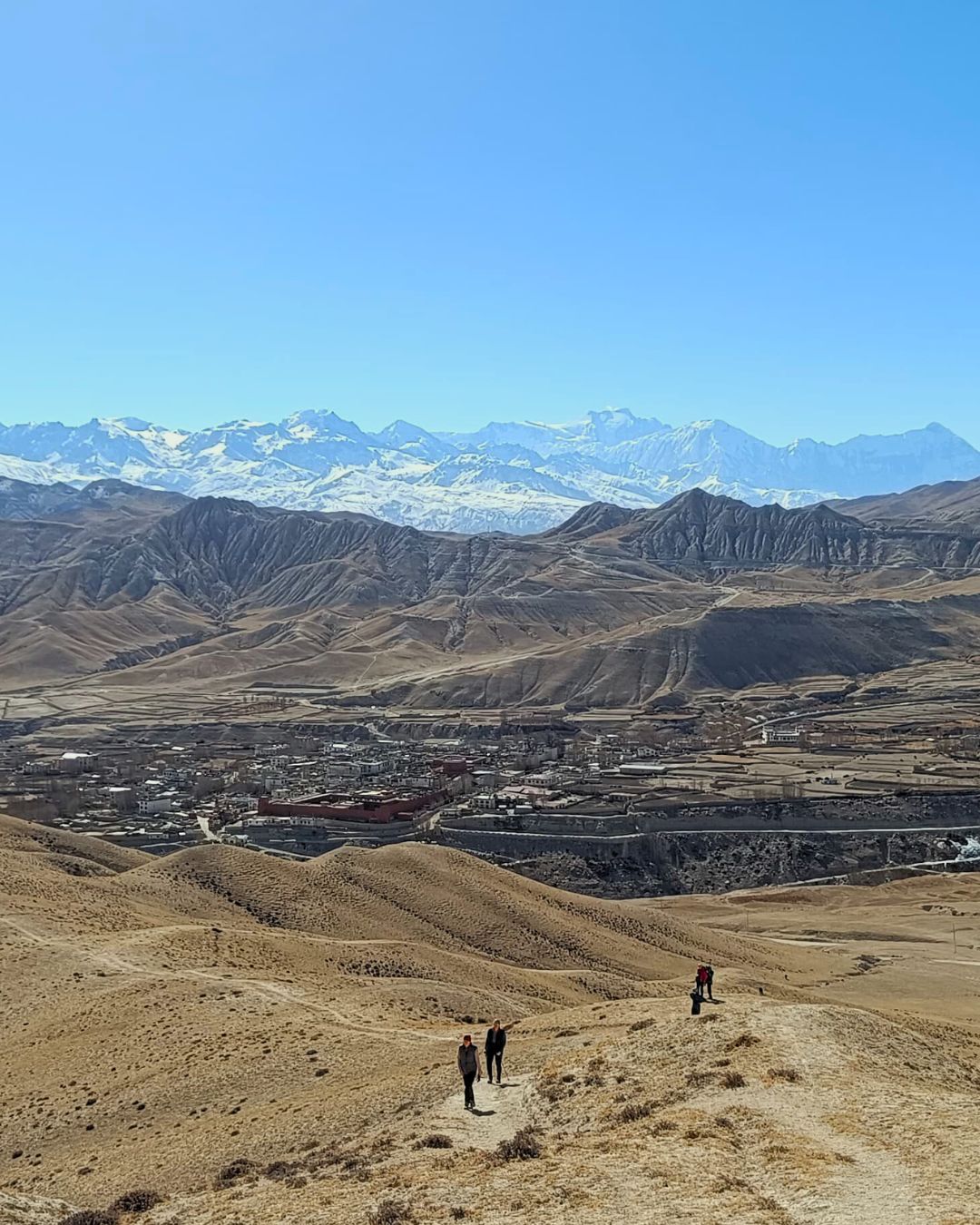
After relaxing at the natural hot mineral springs of Tatopani, the trail climbs into the arid, wind-swept rain-shadow of the Himalayas at Jomsom. Hiking the riverbed flats of the Kali Gandaki, famed for its fossilized Shaligram stones, leads straight into the medieval mud-brick citadel of Kagbeni, the former gateway to restricted Lower Mustang.
Another leg of the trail passes through the cliffside Jharkot, where you’ll see the ancient castle ruins and traditional Tibetan herbal medicine clinics, before heading to the famous Muktinath Temple (3,800m). The ancient shrine is a revered site for both Hindus and Buddhists, known for the 108 sacred bronze water spouts and the natural earth flame.
The final leg of the trek cuts across the back alleys of this region, passing by the remote and fascinating Lupra village, one of the last bastions of the ancient pre-Buddhist Bon religion in Nepal, before looping back towards Jomsom. This trekking circuit offers a moderate challenge with easy-paced walking, comfortable tea-house stays, and a remarkable range of landscapes, from the lush mid-hills to the Tibetan desert plains.
Adventure Himalaya Nepal invites everyone to this classic Himalayan trekking experience to the riverbeds of Kali Gandaki and the feet of the highly revered Muktinath Temple.
Major Highlights
- Rejuvenate your muscles in mineral geothermal thermal baths at Tatopani Natural Hot Springs, located on the riverbanks of the Beni-Jomsom highway.
- Explore the legendary Kali Gandaki Gorge carved out between the 8,000-meter-high Annapurna I and Dhaulagiri peaks.
- Trek through the mud-brick labyrinth and 15th-century Kag Chode Gompa, the official entrance to restricted Lower Mustang.
- Search for sacred marine fossils, Shaligram stones enrobed in ancient seabed rocks found along the Jomsom to Kagbeni riverbed flats.
- Explore ancient castle ruins and the medieval Sakya monastery perched on these cliffs, with panoramic views of trans-Himalayan valleys.
- Visit the revered Himalayan pilgrimage site of Muktinath Temple (3,800m), known for the 108 brass waterspouts and the eternal earth flame at Jwala Mai, plus views of Thorong Peak.
- Discover this hidden canyon village of Lupra with rare pre-Buddhist Bon religion shrines, murals, and monastic heritage.
- Take in the contrasting landscapes of Nepal’s lush mid-hills with the wind-swept Tibetan plateau framed by Nilgiri and Dhaulagiri peaks.
Why Choose This Trek?
The overland trek to Lower Mustang delivers an accessible, high-value Himalayan trekking experience, combining the spectacle of the trans-Himalayan rain-shadow landscapes with insights into the region’s diverse cultural heritage. For those on a tight schedule who still want a true Himalayan trek with ancient cultural history set against towering 8,000-meter peaks, this is the trek for you. Features include:
- At 3,800m, the Muktinath Temple is far higher than Kathmandu but significantly lower than some of the higher Himalayan passes and peaks.
- You can immerse yourself in the unique mix of Hindu and Tibetan Buddhist cultural heritage, along with Bon Po village in the remote canyon village of Lupra.
- We will experience a wide variety of Himalayan environments, from the hot springs at Tatopani to the desert canyons of the Dhaulagiri and Annapurna rain-shadow.
- We can walk right up to the gates of the mythical restricted area of Mustang and experience the landscape without the costly and difficult permits.
Travelling with Adventure Himalaya Nepal
Travel with Adventure Himalaya Nepal Pvt Ltd., ensuring your journey is supported by exceptional service, local expertise, and trusted safety standards, encouraging confidence in booking.
We offer more than trekking, including tours, mountain flights, city guides, and more. We handle all the demanding logistics to make your first-hand experience better and sweeter with Adventure Himalaya Pvt. Ltd. You can have a great experience visiting Nepal. Because visiting Nepal just once is not enough.
Lower Mustang Trek: Major Attractions
Sacred Muktinath Temple (3,800 m)
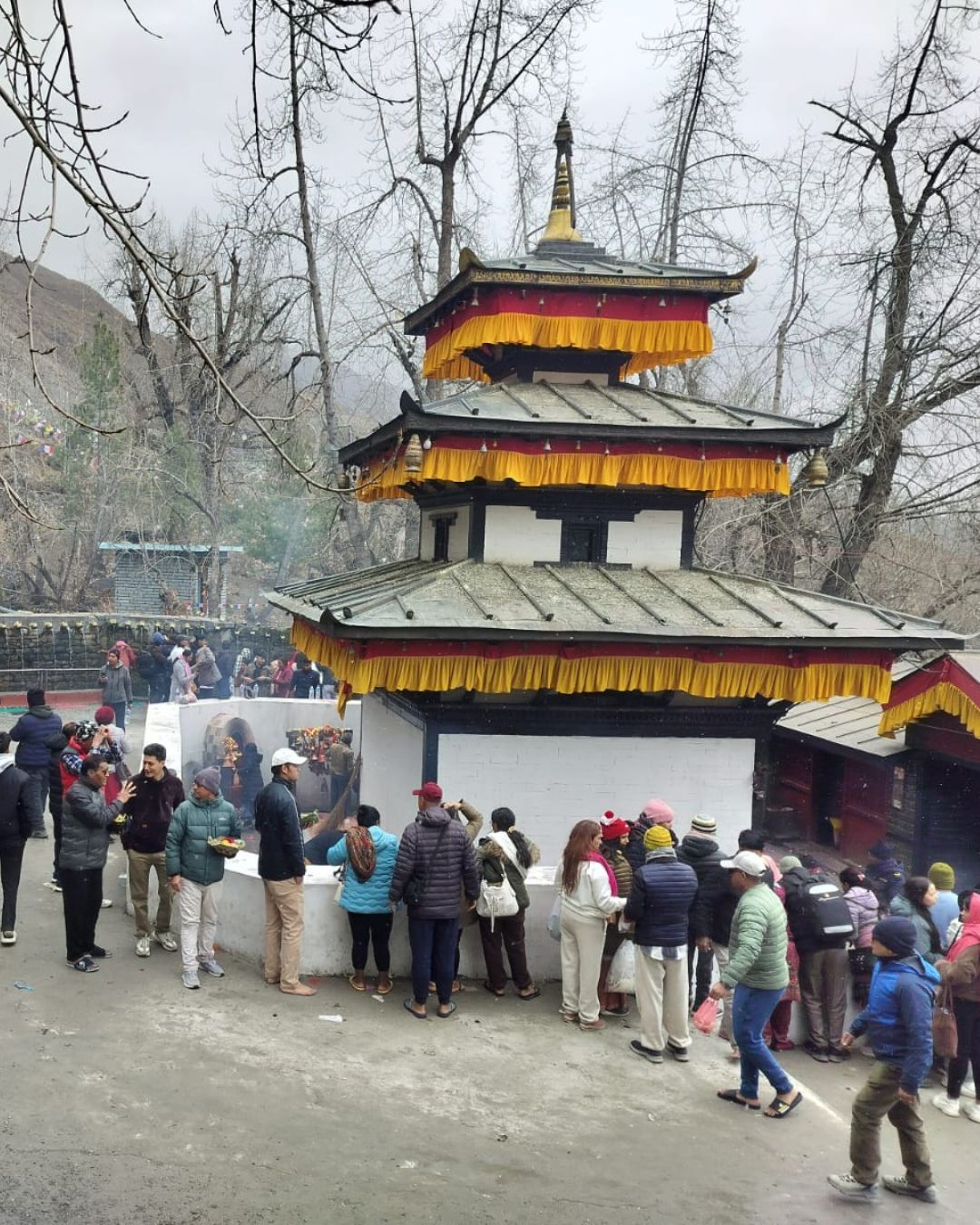
Muktinath Temple is a highly worshipped and highly revered temple in Nepal. It is perched beneath the snowbound Thorong Peak. the Hindus and Buddhists highly revere the site. This multi-faith complex features 108 water spouts shaped like boar heads and two holy purification ponds. The pilgrims visit the nearby Jwala Mai Temple, where an eternal natural gas flame burns continuously, overflowing the mountain water. Muktinath Temple promotes harmony, peace, and prosperity.
Medieval Kagbeni Village & Gateway to Lower Mustang
Kagbeni village feels like entering another century. The village is positioned at the confluence of the Kali Gandaki and Mustang rivers. This fortified mud-brick settlement serves as the official threshold to restricted Lower Mustang. The trekkers will navigate narrow alleys that are flanked by the traditional earther homes and ancient chortens. Kagbeni is the home to the 15th-century Kag Chode Thopten Sampheling Gompa. This active Sakya monastery houses antique Buddhist murals and bronzes, with views of the high-altitude Himalayas.
Kali Gandaki Gorge & Sacred Shaligram Riverbed
Kali Gandaki Gorge is carved between the towering 8000m giants of Annapurna I and Mt. Dhaulagiri. The Kali Gandaki is also the deepest river gorge on Earth. As you travel through its arid canyon floor, the lush forests give way to dramatic, wind-sculpted trans-Himalayan cliffs. The exposed riverbed flats between Jomsom and Kagbeni are famous for the Shaligram stones. The black marine ammonite fossils date back to the prehistoric Tethys Sea.
Tatopani Natural Hot Springs
Nestled deep in a subtropical river canyon along the Beni-Jomsom highway, Tatopani Natural Hot Springs is a popular stop. Tatopani literally translates to “hot water” in Nepali. The venue is famous for its restorative natural geothermal hot springs. Mineral-rich, sulfur-laden waters bubble up naturally along the banks of the Kali Gandaki River, feeding clean stone bathing pools. Trekkers use these therapeutic thermal baths to unwind tired muscles, improve circulation, and recover from rugged mountain drives before climbing into the cooler, arid altitudes of Lower Mustang.
Lupra Village & Ancient Bon Po Heritage
Lupra Village is one of Nepal’s few remaining villages that preserve the rare pre-Buddhist Bon religion. The village is tucked away in the secluded Panda River gorge. By leaving the motorized road behind, trekkers will get to uncover an authentic, untouched Tibetan settlement free from modern vehicular noise. Lupra village houses an ancient Bon Po Gompa that dates back to centuries, with the prayer flags and prayer wheels. The village offers the cultural insight into the mystical traditions of the Himalayas.
Detailed Itinerary
Welcome to Nepal. You will arrive at the Tribhuvan International Airport in Kathmandu. One of our representatives will welcome you and transfer you directly to the hotel. After you settle into the hotel, we will have a trekking briefing session with our licensed trekking guide. Spend the afternoon exploring the vibrant streets of Thamel and purchasing essential trekking gear. In the evening, we will enjoy authentic Nepali cuisine as part of the welcome dinner. Overnight in a hotel, preparing for the trek starting tomorrow.
We will wake up early and enjoy the tasty hotel breakfast. We will depart from Kathmandu along the winding Prithvi Highway. We will follow the Trishuli and Marsyang rivers. The overland drive along the main highway will showcase us lush terraced hillsides, rural villages, and distant Himalayan views. We will arrive in Pokhara in the late afternoon. Check into the hotel and stroll along Phewa Lake. the views of Machhapuchhre will takeaway the tiredness of the journey. Overnight in a hotel.
We will leave Pokhara on the Beni-Jomsom Highway. We will trace the dramatic Kali Gandaki River into the western Himalayas. The paved highway will transition to an adventurous dirt road to Tatopani. We will arrive to Tatopani, which is a famous stop on the Annapurna Sanctuary trek, by late lunch. We will take a revitalizing natural hot spring bath. We will unwind the muscles in the waters of Tatopani. It will be an ideal pre-trek therapy that helps us relieve the travel fatigue. We will stay in a local guesthouse.
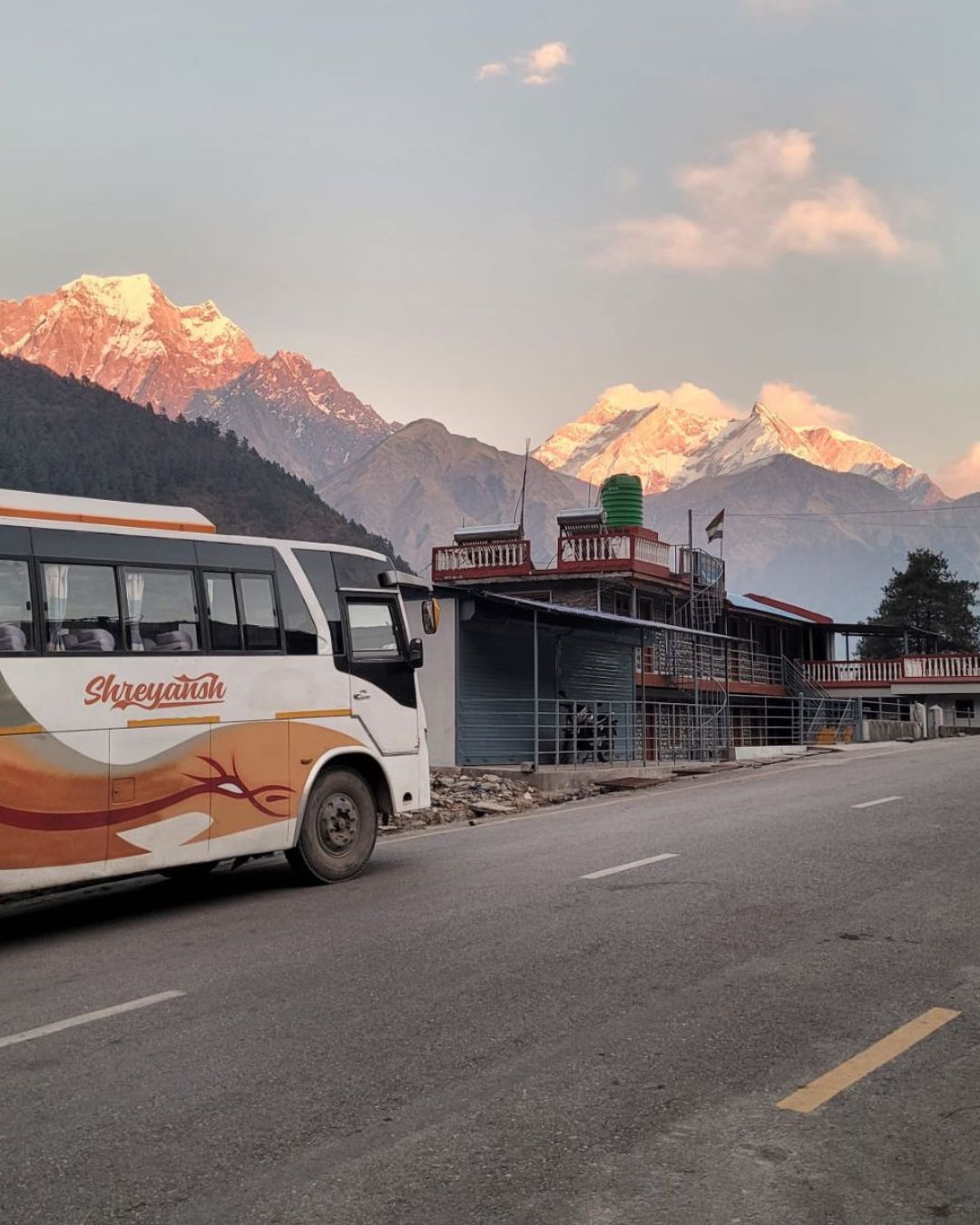
Today, we will navigate through the Kali Gandaki Gorge. It serves as the world’s deepest gorge, flanked by the Dhaulagiri and Annapurna massifs. The route climbs past the roaring Rupse waterfall and the historic Thakali trade hub of Marpha. Marpha is the village of stone-paved lanes and apple orchards. We continue along the winding riverbed to reach Jomsom. The dramatic landscape of Jomsom shifts noticeably as we gain altitude. Overnight in a guesthouse/ hotel.
We will set out on our first trekking day of our Lower Mustang Trek. We will follow the broad, rocky Kali Gandaki riverbed on day one. Starting early in the morning is essential to avoid fierce afternoon valley gales that funnel through the canyon. We will keep a watch for the fossilized ammonites, which are known as Shaligram. Shaligrams are found only on the shores of the Kali Gandaki River. We will arrive in the medieval Kagbeni, the official Lower Mustang gateway. We will explore the alleys, fortress ruins, and centuries-old monastery. Overnight in a teahouse.
Today, we will enjoy a perfect exploration day to acclimatize ourselves in historic Kagbeni. We will visit the chanting morning prayers amid antique thangkas and statues. Walk along the riverbanks and observe the stark boundary line marking the Lower Mustang region. Snowmelt channels irrigate the verdant barley fields; photograph traditional earthen architecture; and engage with the hospitable locals. This relaxed pace will help us adapt to the rising altitude and thinning oxygen levels. Overnight in a teahouse.
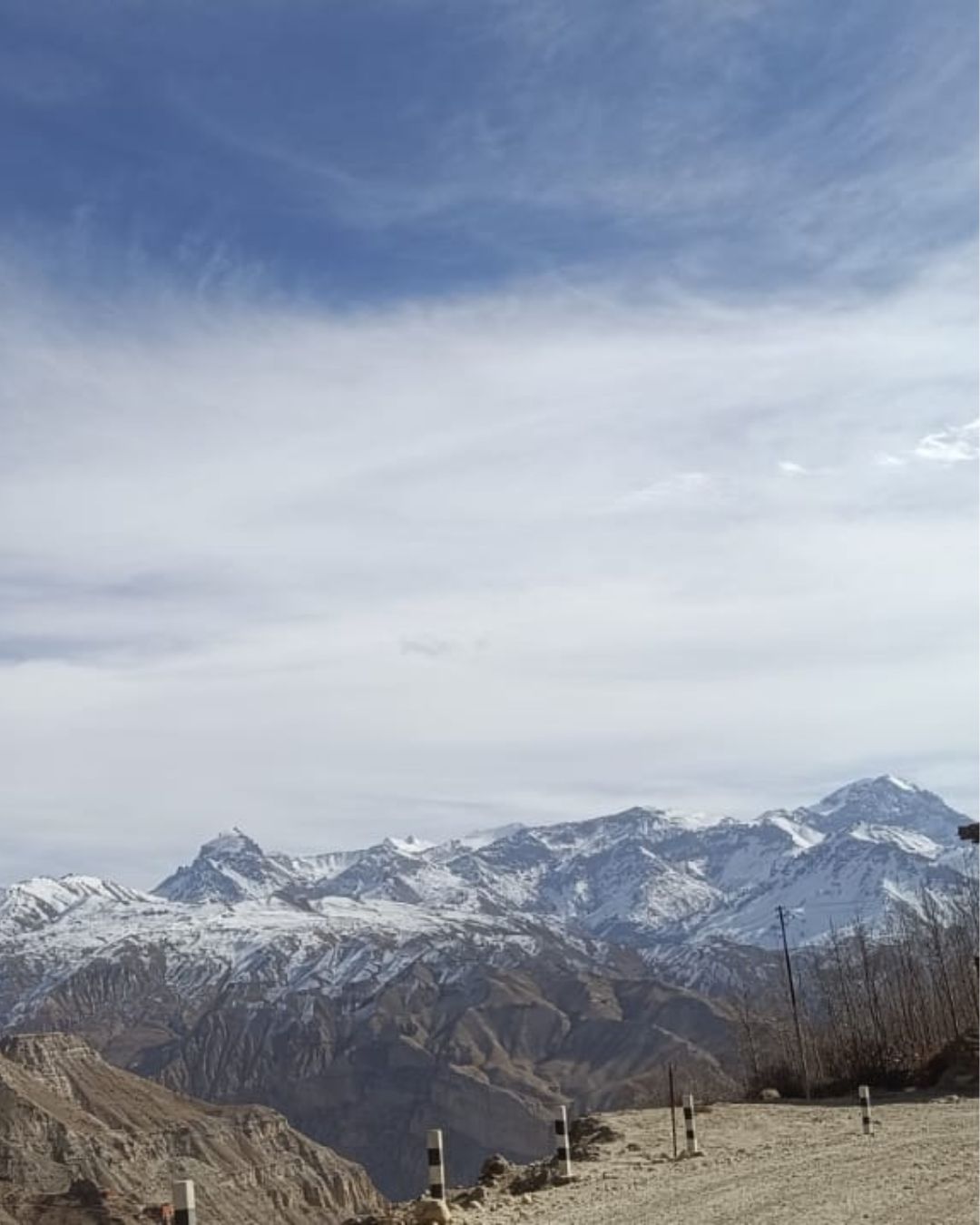
We will ascend out of the river valley steadily along the ancient trade route towards the arid highland desert. As the elevation increases, we will have panoramic views open across Mt. Dhaulagiri, Nilgiri, and the barren ridges of Mustang. We will pass the charming village of Khingar. After walking past Khingar, we will reach the cliffside village of Jharkot. We will explore Jharkot’s traditional and medieval fortress remnants, traditional Shakya lineage Buddhist gompa, and traditional Tibetan herbal medicine. Overnight in a teahouse.
We will trek uphill to the sacred Muktinath Temple. This pilgrimage destination is sacred to Hindus and Buddhists alike. We will witness the devotees bathing beneath the 108 brass waterspouts of Muktinath. The eternal natural gas flame burns above water in Jwala Mai Temple. We will also marvel at the surrounding views of snow-dusted Thorong Peak. We will explore some of the complex shrines around Muktinath Temple before beginning the scenic descent across a panoramic walk down to Kagbeni. We will stay in a guesthouse for the restful night.
We will bypass the main vehicle road by taking the alternate mountain trail through the hidden Panda River gorge to Lupra Village. Lupra is one of Nepal’s few surviving strongholds of the ancient, prehistoric Buddhist Bon Po religion. We will visit the atmospheric Bon monastery adorned with the unique iconography and ancient murals, with prayer wheels. We will continue down to the tranquil valley back into the broad Kali Gandaki riverbed as we conclude the Lower Mustang Trek’s walking section. Overnight in a teahouse.
Board a four-wheel-drive vehicle for the overland descent down the Kali Gandaki Valley. We will travel through Ghasa, Tatopani, and Beni before reaching Pokhara. The landscape will rapidly turn from high alpine desert to emerald terrace fields and subtropical bamboo groves. We will return to Pokhara, check into the lakeside hotel, and treat ourselves to a hot shower. The evening will end our trek with a browse of boutique shops and time to relax at lakeside cafes. Overnight in a teahouse.
We will rejoin the highway for our return journey to Kathmandu. This overland route will trace the Marsyangdi and Trishuli river gorges and passes the bustling roadside markets and suspension bridges. After we reach our Kathmandu hotel, you will have time to rest and freshen up. Use this free time for last-minute souvenir shopping in Thamel for pashminas, singing bowls, and tea. The evening is set for dinner as part of the farewell treat. Overnight in a hotel.
The memorable Lower Mustang and Annapurna overland tour comes to a close today. Savor a final breakfast overlooking the Kathmandu Valley before packing your bags. Depending on your flight schedule, we will have a private vehicle to transfer you directly to Tribhuvan International Airport about three hours before your international departure. Board your homebound flight carrying unforgettable memories, vivid photographs, and deep connections formed across the ancient trails and sacred sanctuaries of Nepal. We hope you enjoyed this trek and look forward to seeing you again.
Price Includes
- Airport transfers in Kathmandu
- Hotel accommodation in Kathmandu and Pokhara (twin sharing)
- Teahouse accommodation during the trek
- All meals during the trek (breakfast, lunch, dinner)
- Licensed English-speaking trekking guide
- Porter service as per group size(1 porter for 2 trekkers)
- ACAP and TIMS permits
- Ground transportation as per itinerary
- First-aid kit and trek management support
Price Excludes
- International airfare
- Nepal visa fees
- Personal trekking equipment
- Travel insurance (mandatory)
- Extra meals in Kathmandu and Pokhara
- Drinks, snacks, and personal expenses
- Tips for guides and porters
Are you looking to customize the trip itinerary?
If the provided schedule is not suitable for you, we can create a personalized travel arrangement tailored to your preferences and requirements.
Altitude
Temperature Condition
Permits Required for Lower Mustang Trek
| Permit | Category | Cost (NPR) | Approx. USD |
| ACAP | Non-SAARC | NPR 3,000 | ~$22–$25 |
| ACAP | SAARC | NPR 1,000 | ~$8 |
| TIMS | Non-SAARC | NPR 2,000 | ~$15 |
| TIMS | SAARC | NPR 1,000 | ~$8 |
Best Seasons for Lower Mustang Trek
Spring Season (March to May)
Spring is one of the favorite seasons for the Lower Mustang Trek. This season delivers optimal daytime trekking temperatures between 13 to 22 degrees Celsius. The trans-Himalayan desert awakens with the blooming apple orchards and emerald barley fields in the oasis villages like Marpha and Kagbeni. The mountain visibility is exceptional in this season. We will be rewarded with the unobstructed visibility of Nilgiri, Dhaulagiri, and the Annapurna massif. This season also allows us to take part in the famous Tiji festival in Lo Manthang. As a result, spring is one of the best seasons for the Lower Mustang Trek.
Monsoon Season (June to August)
Unlike other trekking routes in Nepal, monsoon is an optimal trekking season in the Lower Mustang region. The Lower Mustang region is geographically shielded behind the colossal 8000m peaks of Dhaulagiri and Annapurna. As a result, this region sits firmly within the Himalayan rain shadow. This region receives less than 200- 300 mm of annual rainfall. High-altitude trails remain dry and warm, with comfortable daytime weather and vibrant green agricultural terraces. Trekking in these months will offer the peaceful paths free from tourist crowds. Adventure Himalaya Nepal highly recommends the monsoon season for comfortable dry trekking conditions. This season is also perfect for a Lower MustangOverland tour.
Autumn Season (September to November)
Autumn is another great trekking season. In fact, autumn is the most-liked and reliable trekking season across the Himalayas. This season offers crystal-clear post-monsoon skies. The air will be crisp, and visibility will be high-definition. The high desert ridges and jagged canyon walls will reach the sharpest point of the year. The major daytime temperatures range comfortably from 12 to 20 degrees Celsius. We will have perfect daytime trekking conditions, with a lower chance of rainfall. Early autumn brings the Yatrung festival, a lively local horse-racing and harvest celebration held throughout Mustang. The consistent weather, firm trails, and the striking contrast of deep blue skies will bless us.
Professional Trekking Crew Support
As your professional travel partner, Adventure Himalaya Nepal will provide government-certified, English-speaking, licensed trekking guides and experienced mountain porters. These professionals will ensure you have a seamless Tilicho Lake trekking adventure. Your trekking guide will lead the daily logistics, navigate the trail, and handle permits and teahouse bookings. The trekking guide will also manage emergencies and share rich insights into Gurung and Magar culture along the trek.
Local porters will carry your main duffel bags, leaving you with your day backpack. They typically carry up to 20-25 kg of baggage shared between two hikers. These personnel will receive fair daily wages, proper gear, meals, and lodging. In accordance with the Himalayan porter welfare standards and government regulations. All the crew members are provided with full medical and accident insurance coverage throughout the trek.
Difficulties of Lower Mustang Trek
The major challenge of the Lower Mustang Trek remains the rapid elevation gain between Tatopani (1190m) and Muktinath (3800m). This gain increases the risk of Acute Mountain Sickness (AMS). We will have to contend with the high-velocity valley winds, along with the Kali Gandaki funnel, blinding dust, and significantly lower temperatures. Additionally, the travelers face strenuous, unpaved off-road drives along the Beni Jomsom highway. We may have to face irritation of the lungs and eyes while walking and driving on a dusty landscape.
Remedies & Prevention Tips
- We have to drink 3 to 4 liters of water daily and keep an unhurried pace to keep the oxygen levels sufficient for the body.
- We will begin our hikes by 7:00 AM to reach the next teahouse before the fierce afternoon winds and gales.
- We will have high-filtration UV glasses, masks, and windproof outer layers to protect against airborne grit and protect the lungs.
- Rigid, broken-in trekking boots with ankle support and sturdy, adjustable trekking poles are a good option.
- One must prepare for the rough roads and carry motion-sickness remedies, a neck pillow, and pack personal luggage inside the heavy-duty waterproof duffels.
Travel Insurance
When travelling to a foreign country for multiple activities, comprehensive travel insurance that covers emergency costs is essential. For a high-altitude trek like the Lower Mustang Trek, the importance of Travel insurance escalates. We will reach 3800m at Muktinath as the highest point of our trek. The Lower Mustang Trek involves medical risks, altitude sickness, and sudden injuries. To get an immediate medical response, you may need to call for a helicopter rescue operation from Kathmandu or Pokhara. Such rescue operations can cost up to 5-8000 USD alone. Therefore, trekkers must have a special high-altitude travel insurance.
In case of severe injuries and altitude sickness, unexpected blizzards, or trail injuries, ground evacuation is practically impossible. A dedicated policy guarantees immediate emergency helicopter rescue and covers medical evacuation expenses that can wipe out hard-earned savings. We recommend that you buy travel insurance from a trusted travel insurance company.
FAQs
You need two permits: the Annapurna Conservation Area Permit (ACAP) and the Trekkers' Information Management System (TIMS) Card. You do not need the expensive USD $500 Restricted Area Permit required for Upper Mustang, as Kagbeni marks the southern boundary of the restricted zone.
The best seasons for the Lower Mustang Trek are autumn (Sep to Nov) for the best mountain visibility and spring (March to May) for pleasant walking conditions and rhododendron blooms. The Lower Mustang lies in the Himalayan rain shadow; it is one of the few trekking areas that are feasible during the monsoon season.
The maximum altitude on our Lower Mustang Trek is 3,800 m. You will reach this altitude at Muktinath Temple. Mild symptoms of Acute Mountain Sickness (AMS) can occur above 2,800 meters, but because you spend nights below 3,600 meters and the itinerary includes an acclimatization day in Kagbeni, severe altitude sickness is uncommon.
Lower Mustang Trek is graded as moderate. This trek involves no technical mountaineering. However, daily trekking durations are relatively short on well-paved trails and dirt tracks. It is an excellent trek to all the trekkers, be it beginner or seasoned.
Per Nepal Tourism Board regulations, foreign trekkers in the Annapurna Conservation Area must travel with a government-licensed trekking guide arranged through an authorized agency. Solo, unguided trekking without a licensed guide is not permitted.
The route of Lower Mustang between Pokhara and Jomsom combines the paved highways and rough unpaved off-road tracks. The drive will be bumpy and rugged, etched into the dramatic cliff faces across the Kali Gandaki Gorge. We will book sturdy 4WD jeeps for the best comfort and safety.
There will be intense thermal pressure differences between the hot southern plains of Nepal and the high, arid Tibetan plateau. The Kali Gandaki Valley funnels winds every day between 11:00 am and 4:00 PM. Trekkers routinely start early in the morning to finish hiking before the winds pick up.
Accommodation consists of traditional mountain teahouses and lodges. Rooms are typically twin-share with wooden beds, foam mattresses, and blankets. Many lodges in Jomsom, Tatopani, and Kagbeni have attached bathrooms, while higher or more rural stops (like Jharkot or Lupra) offer cozy, simpler facilities.
Teahouses serve a wide variety of freshly prepared meals, centered on traditional Dal Bhat (steamed rice, lentil soup, and seasonal curries). You will also find Thakali specialties, Tibetan momos, thukpa, tsampa porridge, noodles, eggs, and local Mustang apple pies and cider around Marpha and Jomsom.
Muktinath Temple is the sacred pilgrimage site for both Hindus and Buddhists. The Hindus venerate it as one of the 108 divya desams dedicated to Lord Vishnu. The pilgrims bathe under the 108 holy brass spouts to cleanse their bad karma.
Shaligrams are the fossilized ammonites from millions of years to the ancient Tethys Sea. They are embedded in the black shale of the Kali Gandaki riverbed. In Hinduism, they are highly regarded and revered as the representations of Lord Vishnu. We can find them on the trails of the Lower Mustang Trek. the commercial export of these shells is strictly regulated under Nepalese Heritage protection laws
Lupra is one of the few cultural villages in the Himalayas dedicated to Bon Po. Bon Po religion is a pre-Buddhist animistic and shamanistic religion of ancient Tibet. Unlike Tibetan-Buddhist sites where the shrines are circumambulated clockwise, Bon sites are circled anti-clockwise.
Yes. Most local teahouses have the access to electricity and Wi-Fi. Some teahouses charge a small fee for device charging or Wi-Fi. You don't have to be a full digital nomad throughout the Lower Mustang trek.
There are ATMs in Kathmandu, Pokhara, and Jomsom. But in Jomsom, ATMs can run out of cash or experience power/network disruptions. You must withdraw enough Nepalese Rupees (NPR) in Kathmandu or Pokhara to cover all personal expenses, drinks, hot showers, and tips for the entire mountain leg.
Yes. There are daily scheduled flights operated between Pokhara and Jomsom airport in the early morning. However, high-altitude winds and low cloud cover can cause delays or cancellations. That is why driving from Jomsom to Pokhara is highly preferred.




