
Mera Peak Climbing: 15-Day Expedition to Nepal’s Highest Trekking Peak
- Nepal See on map
-
Duration 17 Nights/ 18 Days
-
Difficulty Challenging
-
Region EVEREST REGION
-
Activity PEAK CLIMBING
-
Best Season March-May
-
Start/End Point Kathmandu
-
Group Size 1-12 People
Mera Peak Climb: An Overview
Mera Peak Expedition is one of the most popular and accessible high-altitude expedition programs. This expedition is officially classified as the Group B trekking peak by the Nepal Mountaineering Association. The 6461m climb offers beginners and ambitious climbers a rare opportunity to blend with the pristine Hinku Valley on the edge of Makalu Barun National Park. It also acts as the ultimate gateway into the Himalayan alpine climbing without requiring advanced technical climbing skills.
The adventure begins with the swift and thrilling mountain flight to Tenzing-Hillary Airport in Lukla. We will then branch away from the commercial Everest Base Camp corridors to the rural Solukhumbu. We will traverse the settlements like Paiya, Panggom, and Ningsow. We move through the dense rhododendron ravines and alpine riverbeds along the Inkhu Khola.
Adventure Himalaya Nepal structures this 15-day route from Kathmandu for progressive high-altitude acclimatization that culminates on the mountaineering staging hub of Khare. The certified IFMFA/NNMGA climbing guides will lead the expedition from scratch to make our journey a lifetime experience. They will train us to use the gear such as crampons, a jumar ascender, fixed-rope travel, and ice-axe arrest methods.
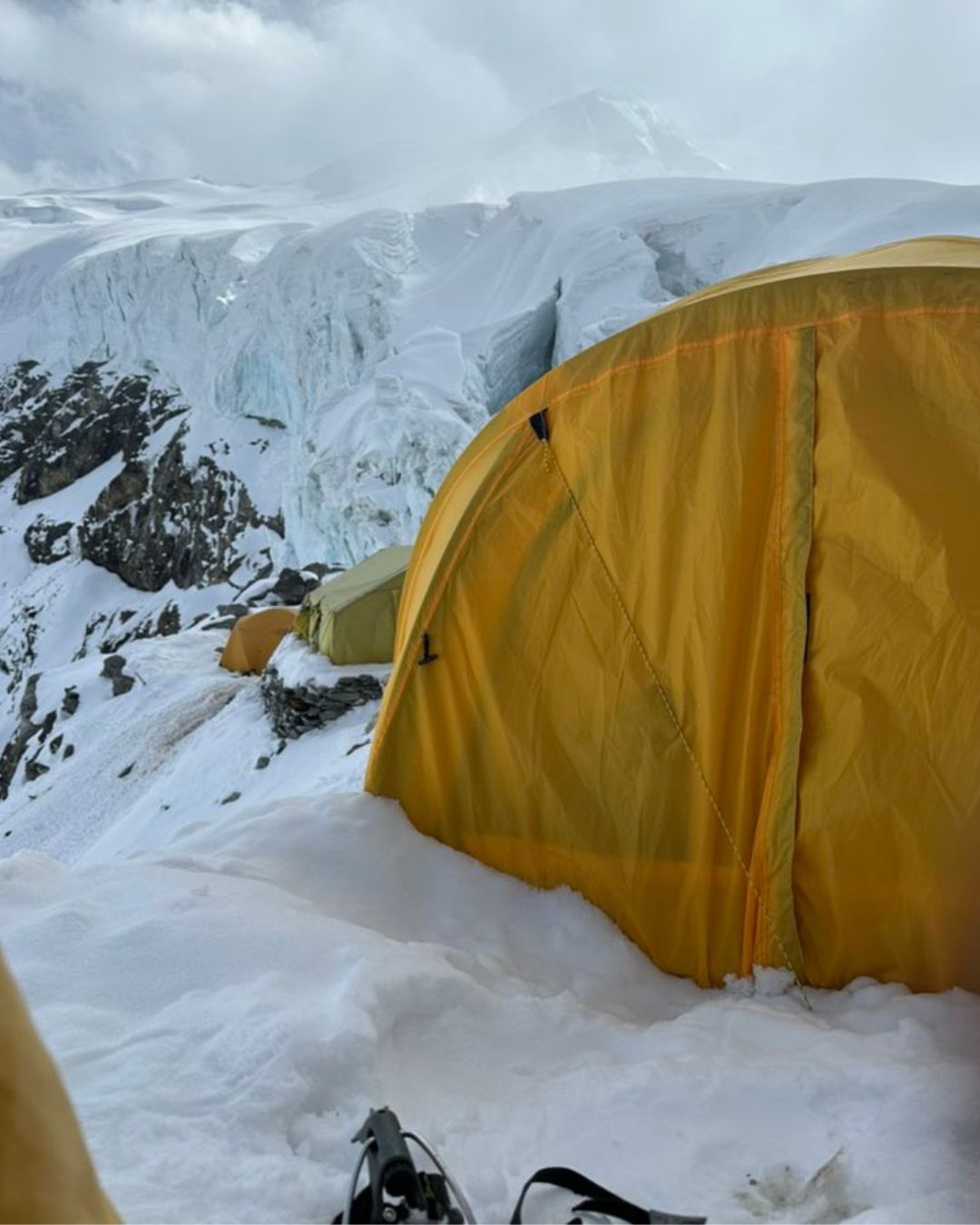
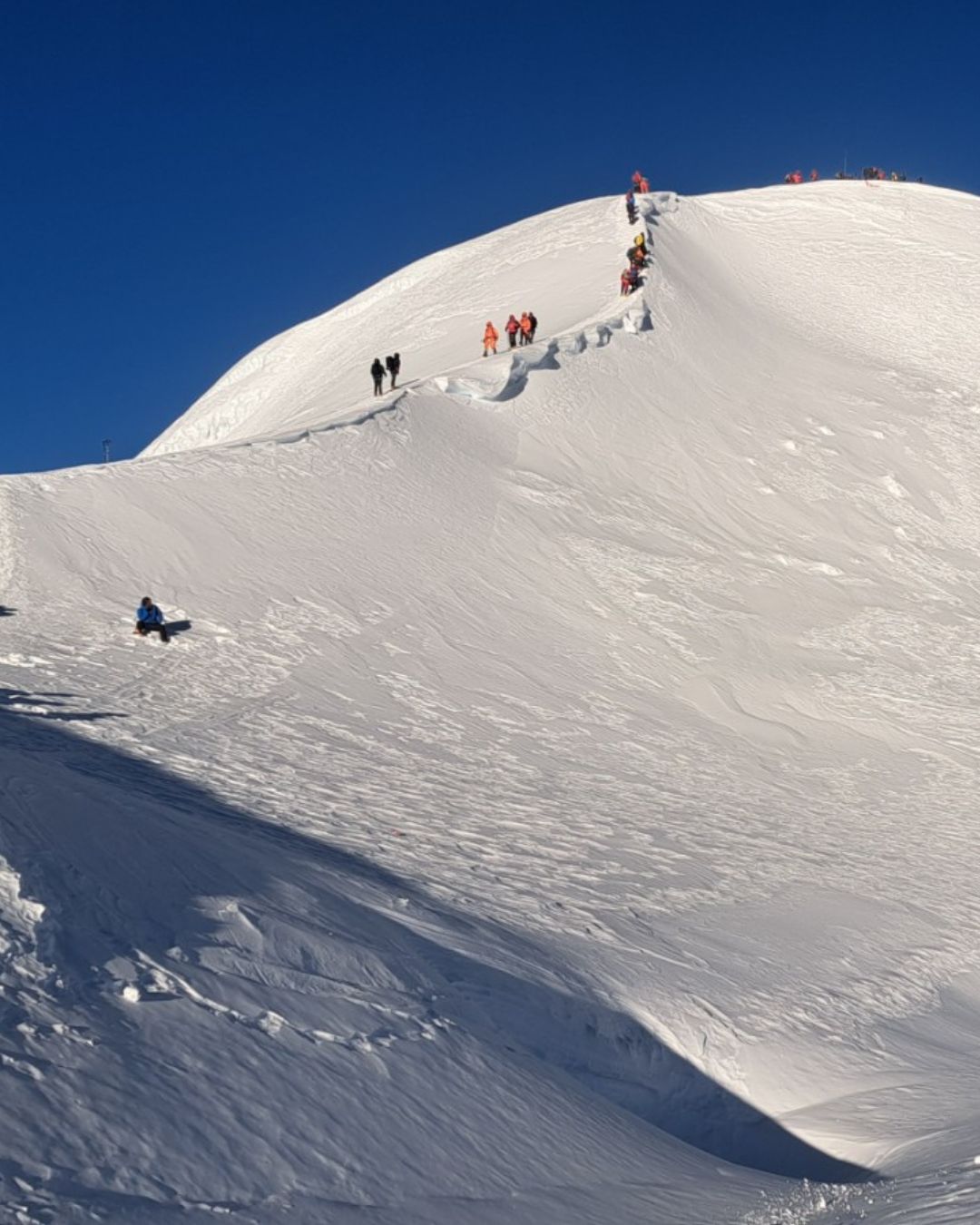
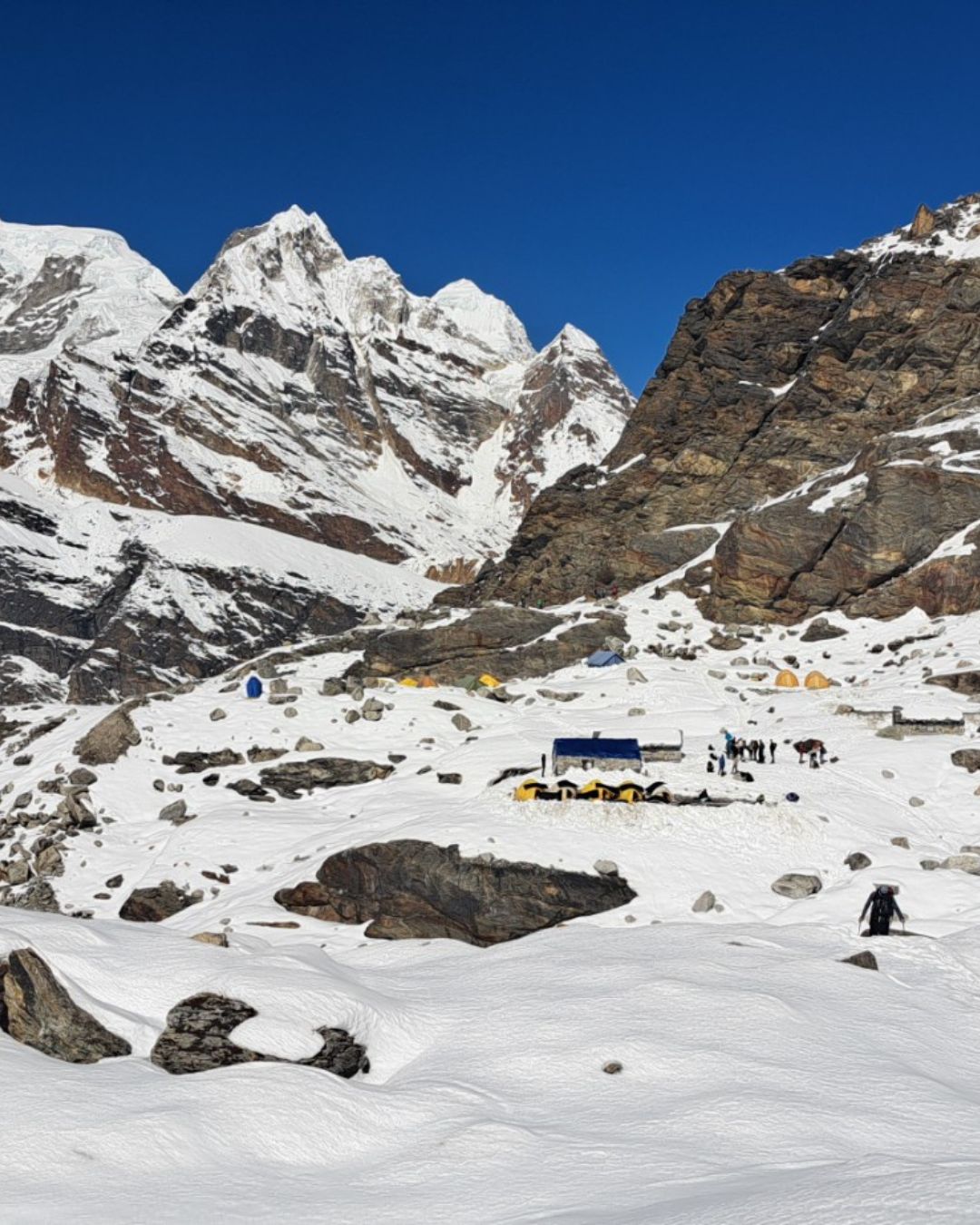
Our Mera Peak ascent transitions to true glaciated terrain at Mera High Camp. At 5,800 m, we will have a tented campsite. From this dramatic cliffside perch, the climbers will launch an alpine-start push to the Mera Peak Central summit. Our climb begins at 2:00 Am and continues for 7-8 hours. The climb follows low-angle 30-degree snow slopes before we conquer an exposed 45-degree final headwall.
We will be standing firm on the summit that delivers us an unrivaled 360-degree vantage point. We will be rewarded with the views of six 8000m peaks. Mount Everest, Kanchenjunga, Lhotse, and Makalu are the most famous ones. The expedition will conclude via an exhilarating crossing of the Zatrwa La Pass back to Lukla. This is a perfect blend of trekking and climbing, offering extreme-altitude achievement, pristine wilderness solitude, and authentic Sherpa mountaineering heritage.
Stand on top of Mera Peak (6,476m) and enjoy an amazing view of five of the world’s tallest peaks, including the mighty Mount Everest. You can always rely on the professional and expert guides of Adventure Himalaya Nepal to take you through the pristine trails with utmost safety and make you experience the legendary warm hospitality of the local Sherpa people. So, pack your bags and join this Himalayan adventure today.
Major Highlights: Mera Peak Climb
-
-
-
- Mera Peak is the main attraction of our trek, as it is one of the most accessible alpine mountains in the country.
- We will get the views of five major 8000 m peaks, including Mt. Everest, Kanchenjunga, Lhotse, Makalu, and Cho Oyu.
- We traverse deep, unspoiled rhododendron and bamboo forests within the Makalu Barun National Park.
- Navigating the dramatic Mera Peak Glacier will reveal some of the best high-altitude moderate snow slopes on technical climbing.
- We avoid the major Everest Base Camp route and get the authentic Himalayan hospitality alongside unrivaled Himalayan views.
- Dramatic Mera High Camp for one night on an iconic rocky perch will reward us with sunsets and sunrises glowing over Ama Dablam, Chamlang, and Baruntse.
- Tackle an exhilarating high-altitude pass back into Lukla, with sweeping panoramic views from Zatrwa La Pass.
- The authentic Sherpa Culture in the remote region inside Makalu Barun National Park, alongside sacred shrines, will provide us with deep cultural immersion.
-
-
Mera Peak Climb Benefits:
Mera Peak is Nepal’s premier mountaineering objective. It is an accessible and balanced 6,000-meter expedition with non-technical terrain. This expedition is ideal for the trekkers with an aspiring mindset and seasoned mountaineers alike. It delivers a genuine feel of the Himalayas without requiring vertical ice climbing.
- As a non-technical glacier climb, Mera Peak allows the beginners to master crampon techniques and fixed rope travel alongside the high-altitude endurance.
- We will get views of the five major 8000m peaks in the Khumbu Valley. This includes Everest, Lhotse, Cho Oyu, Makalu, and Kanchenjunga.
- The pristine wilderness and deep cultural immersion far from crowded trails await us, unlike the commercialized trekking routes.
- We will have a superior acclimatization process along with the hybrid teahouse-camp comfort during the entire trek and expedition.
Travelling with Adventure Himalaya Nepal
Travel with Adventure Himalaya Nepal Pvt Ltd., ensuring your journey is supported by exceptional service, local expertise, and trusted safety standards, encouraging confidence in booking.
We offer more than trekking, including tours, mountain flights, city guides, and more. We handle all the demanding logistics to make your first-hand experience better and sweeter with Adventure Himalaya Pvt. Ltd., so that you can have a great experience visiting Nepal. Because visiting Nepal just once is not enough.
Major Attractions
1. The 360-degree panorama of Mera Peak Summit (6,461m):
Climbers who conquer the Mera Peak central summit are rewarded with the most spectacular Himalayan panorama available to a trekker. From over 6,400ft, the Mera summit offers an unrivaled view of five of the world’s highest 8,000-meter peaks, including Everest (8,848m), Kangchenjunga (8,586m), Lhotse (8,516m), Makalu (8,485m), and Cho Oyu (8,201m). Additionally, the climber’s eye can trace the steep technical faces of Ama Dablam, Chamlang, and Baruntse, which provide the most outstanding view of Mera’s summit.
2. The Mera High Camp (5,800m):
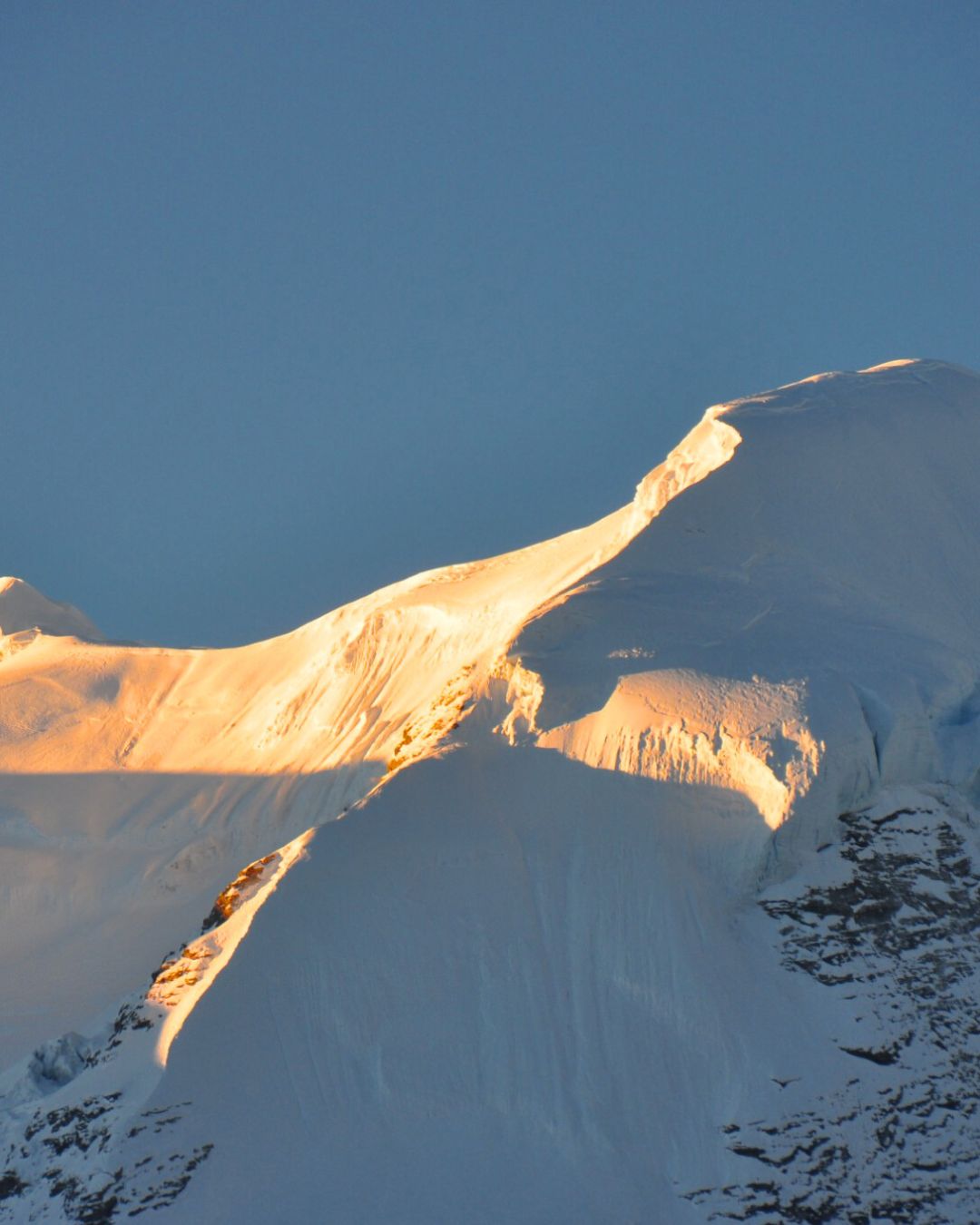
Mera High Camp is a fantastic place to watch the sunset, perched on a rocky knoll commanding wonderful views of the Mera Glacier. This rocky outcrop is truly one of the most spectacular high-altitude camps in the world. Settled above the cloud sea, Mera High Camp offers unique world-class photographic opportunities to capture the golden hour of the world. It also provides an incredible vertical view of the towering southwest face of Chamlang and the massive south face of Lhotse. It is the perfect overnight camp for hikers on the most challenging trek in the world.
3. The isolated wilderness of the Hinku Valley:
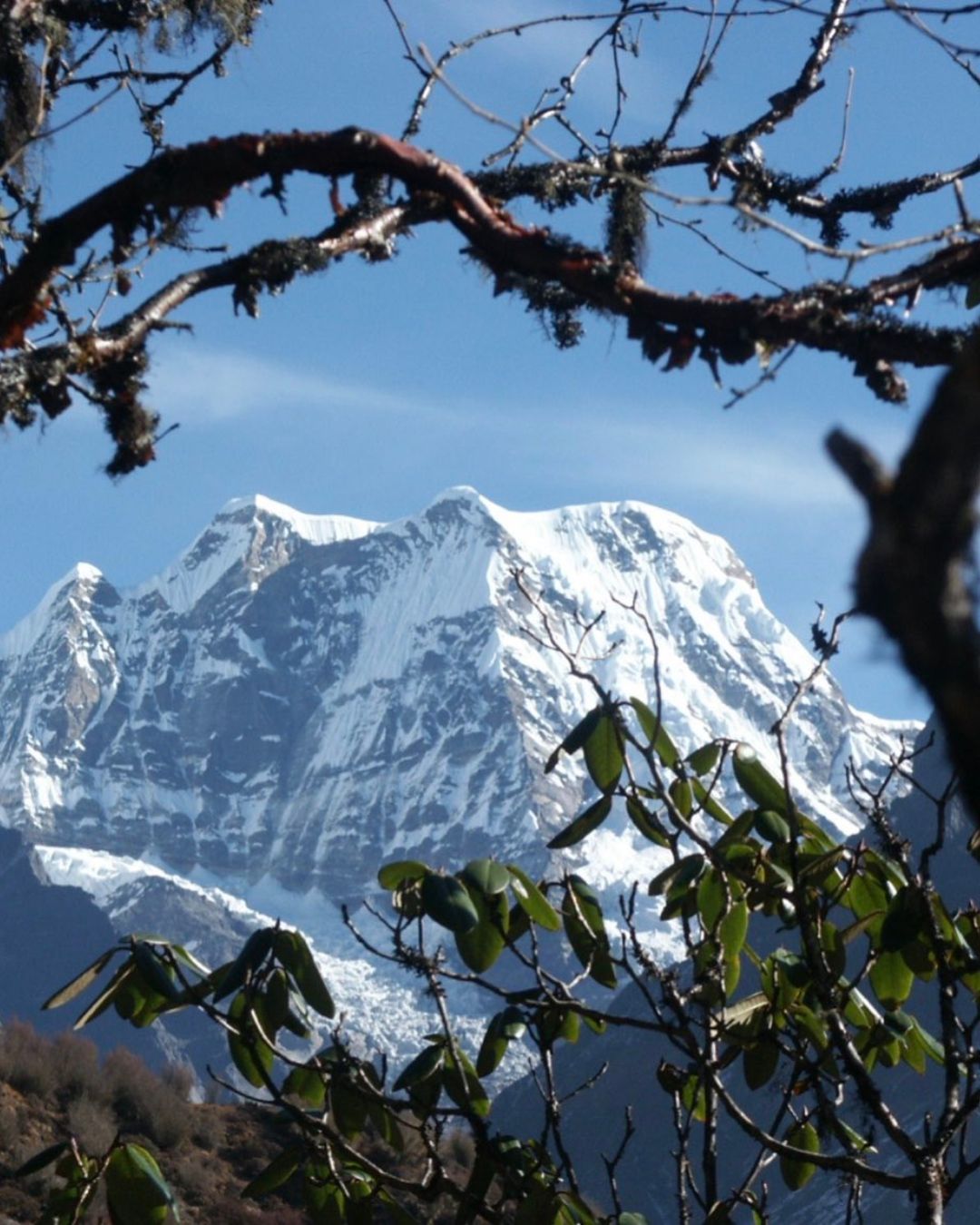
The rugged paradise of the Hinku Valley lies inside the Makalu Barun National Park’s border. It is a remote, wild place untouched by the crowds. The ancient valley is dominated by dense, mossy forests of bamboo and rhododendron that open to spectacular subalpine meadows. The rich wild habitat supports yaks, musk deer, and the elusive red panda (an endangered mammal in the region). These Himalayan valleys offer trekkers solitude and wilderness to they head to high-altitude glaciers and moraines.
4. The ancient Lungsumgba Gompa (4,220m):
This ancient Lungsumgba Gompa is a rock fortress, surrounded by a massive boulder between the Kothe and Thaknak villages and a long scree path. Beautiful prayer flags and mani stones characterize this 200-year-old Buddhist shrine. Most trekkers to the Mera Peak summit stop by this monastery on their return journey with Sherpa guides to offer juniper incense and perform ritual puja for good fortune, fine weather, and protection. It is a local village’s ancient and most revered monastery.
5. The formidable Zatrwa La Pass (4,610m):
Zatrwa La Pass is one of the toughest rocky passes connecting the trail from Hinku Valley to the Solukhumbu basin on your way back to Lukla. It offers a magnificent view of the Dudh Koshi River gorge below and the towering mountains. Zatrwa La Pass’s rocky, pitted scree sides offer a thrilling challenge for serious hikers. On a clear morning, the pass’s prayer flags flutter colorfully against the clear sky, making it an excellent photo spot.
Detailed Itinerary
Our Mera Peak expedition begins today. We will start with a mountain flight from Kathmandu(or Manthali) to Lukla Airport. The trail descends southwards through the Dudh Koshi river basin. Hikers will get to traverse oak woodlands and cross the Handi Khola suspension bridge, that encounters quiet farming settlements along the way. This gradual opening hike to the village of Paiya will warm up our muscles to be ready to the trek ahead. Overnight in a teahouse.
We will climb steadily from Paiya. The trail crosses the forested Kari La Pass (3145m). We can wind through quiet bamboo and rhododendron paths that offer clear glimpses of the southern Khumbu wilderness and Dudh Kunda Himal. After crossing some scenic ridges and mountain streams, we will reach the traditional Sherpa village of Panggom. This village is famous for the historic monastery and terraced slopes. We will be offered an authentic cultural immersion away from the commercial routes.
The route today will cross another Pass named Panggom La Pass before entering the remote paths carved above the Inkhu Khola. We will traverse the lush moss forests and rocky outcrops, and trekkers will skirt the borders of Makalu Barun National Park. the footpath will feature gentle ridge ascents and tranquil river valley descents. We will be led straight into the secluded settlement of Ningsow. This section will ensure us a steady and active acclimatization while preserving our stamina. Overnight in a teahouse.
Today we have a rugged, endurance-testing long day. We have to walk through the undisturbed Himalayan wilderness. The trekkers navigate steep climbs, narrow root-strewn tracks, and slippery descents. Afterward, we enter the scenic Hinku Valley watershed. Pass the bamboo groves and mountain streams. At the secluded riverside camp of Chhetra Khola, we hydrate, eat a high-calorie meal, and rest after a demanding full-day trek. Overnight in a teahouse.
Today, the trail will merge with the main Hinku Valley trekking corridor as we climb out of the Chhetra Khola riverbed. We will pass through dense forest that gives way to subalpine juniper and birch woodland. We will have a dominating view of Mera Peak South on the northern skyline. We will cross suspension bridges, boulder fields along the riverbank, and pine forests. We will then enter Kothe, the central logistical hub of the lower valley. Kothe houses national park permit checkpoints and comfortable teahouses. Overnight in a teahouse.
Today, we enter the alpine zone. The trail will follow a wide, glacier-carved riverbed alongside the tumbling Inkhu Khola. We will get to visit the 200-year-old Lungsumgba Gompa. This shrine is the historic Buddhist rock sanctuary where climbing teams offer prayers for a safe mission. We will reach Thaknak by lunch. It will be a short day to acclimatize ourselves to the alpine zone. We will stay in a teahouse, soaking in views of looming granite faces in the distance.
Our hike from Thaknak to Khare will be short but physically demanding. This is due to reduced oxygen levels. The path will ascend along the lateral moraine of the Dig Glacier before we climb steep boulder trails near the glacial outlet of Sabai Tsho. While we reach Khare, the primary base for climbing operations, we will be rewarded with the magical views of Mera Glacier. This camp serves as the official springboard. We will set up a tent and rest early.
Today is a dedicated safety preparation day. A certified IFMGA/NNMGA expedition guide will lead us. We will ascend surrounding glacial moraines to practice some important mountaineering skills that include fixed rope ascension using jumars, harness setups, and ice axe techniques. Our guides will teach us on how to use the equipment, and we will perform a warm-up climb as part of the practice. This step will help prevent injuries and acute mountain sickness.
We are leaving Khare today. The team will climb up the steep scree before we strap on the crampons at the Mera Glacier boundary. Moving in, roped teams and porter guides will set up the ropes on snow slopes across the Mera La Pass to reach Mera High Camp. the Mera High Camp offers magnificent views of Mt. Everest, Lhotse and Cho Oyu. the sunset view from Mera High Camp is very famous. We will rest early, as we have to begin the midnight summit push.
Summit day starts at around 2 am, when the sun is just barely visible, if at all, over the horizon. You climb slowly on the snow slopes to the final 45-degree headwall, protected by fixed lines, until you reach the summit of Mera Peak Central (6,461 meters). From here, you can take in absolutely stunning 360-degree views over the Himalayas, including the Everest massif and more. After a well-deserved celebration at the top, you rappel past the High Camp on your way back down to the safety of the thicker air and teahouses at Khare.
We have an acclimatization day to cope with the Himalayan altitude sickness. This day will provide us with critical expedition safety against Himalayan weather and thinning air. If fierce ridge winds delay the Day 10 push, this day will also help to get back to a second summit-push attempt. If we reach the summit on schedule, we will have invaluable rest and recovery before we start descending. Overnight in a teahouse.
Our expedition retraces its steps southwards through the Hinku Valley. We will descend rapidly through Thaknak alongside the Inkhu Khola riverbed. The descent will allow our bodies to absorb denser oxygen levels, so our energy will increase with each kilometer. We will reach Kothe by lunch. We will celebrate our success of the trek and Mera Peak Expedition with hot meals, showers, and a relaxed evening by the subalpine forests. Overnight in a teahouse.
We will depart the Kothe River basin today. The return route will branch westward to breach the mountain barrier that separates the Hinku and Solukhumbu valleys. The trail climbs steeply through the dense rhododendron woods. We will cross the streams and alpine meadows in the process. We will rise above the treeline along the western valley walls and arrive at the high alpine camp of Thuli Kharka. Overnight in a teahouse.
The final trekking challenge will begin with an early crossing of the rugged Zatrwa La Pass. We will traverse from the prayer-flag crest, where hikers can take in panoramic views of the Dudh Koshi basin. We will descend steep rocky switchbacks through juniper pastures and Chutanga. We will arrive back in the lively mountain hub of Lukla by late afternoon. We will have completed our expedition and trekking section with this. Overnight in a teahouse.
Today is the end of our Mera Peak expedition itinerary. We will board an early morning flight from Lukla Airport that marks your scenic flight back to Kathmandu or Ramechhap. We will fly along the Himalayan crest where the journey trades the glacier peaks for the historic sprawl of the Kathmandu Valley. A private transfer will take us directly to the hotel, where you will get to shower and rest. The evening will be a time to celebrate the successful trek with dinner. Overnight in a hotel.
Price Includes
- Airport transfer services arrival/departure and local flight schedule
- 3-Night Hotel in Kathmandu
- Accommodations during the treks and 1-night tent camp.
- Standard 3 meals while on the trek and climbing time a cup of tea or coffee with meals
- Experienced English-speaking government Licensed trekking guide
- Climbing Guide with the Climbing crew
- Porter
- All applicable Climbing Permits, National park TIMS, and Local permits
- Flight tickets from Kathmandu- Lukla or manthali – Lukla and Lukla to Kathmandu or manthali
- Official expenses and government tax/VAT
- Farewell Dinner in a fine Restaurant
Price Excludes
- International flight tickets
- Nepal visa Fees
- Lunch, Dinner, and Extra Night Accommodation in Kathmandu
- During trekking time personal expenses, snacks, drink Beer coke, juice, water, Hot showers, wi-fi, etc.
- Travel and health Insurance which cover emergency Rescues and evacuations
- Tips for guide, and porter (it is expected)
Are you looking to customize the trip itinerary?
If the provided schedule is not suitable for you, we can create a personalized travel arrangement tailored to your preferences and requirements.
Permits Required
| Permit Name | Issuing Authority | Cost (Per Climber) |
| NMA Mera Peak Climbing Permit | Nepal Mountaineering Association (NMA) | Spring: $250 – $350
Autumn: $125 – $175 Winter/Summer: $70 – $200 |
| Makalu Barun National Park Permit | Department of National Parks & Wildlife | NPR 3,000 (~$23 – $25) |
| Khumbu Pasang Lhamu Local Entry Permit | Khumbu Pasang Lhamu Rural Municipality | NPR 2,000 – 3,000 (~$15 – $23) |
| Garbage Deposit (Refundable) | NMA | $500 (per climbing team) |
Note: All the required permits are only eligible to be made and obtained through an active trekking agency based in Nepal for the foreign nationals.
Adventure Himalaya Nepal will start the processing of Permits after the trekker arrives in Nepal.
Best Time for Mera Peak Expedition
Spring Season (March to May)
Spring is the best and prime time for the Mera Peak expedition. This season is famous for moderate temperatures, long daylight hours, and vibrant scenery. As the winter recedes, the lower Hinku Valley comes alive with dense and blooming rhododendron and magnolia forests. High on the mountains, mornings will be sharp and clear, with perfect morning views of the Himalayas. Afternoon clouds and occasional showers are likely, but trekking conditions are usually excellent. After winter, spring brings relatively dry, warm conditions. Temperatures at Mera High Camp are milder throughout the season than in autumn and winter. Reliable climbing windows and a softer snowpack on the final headwall, along with the built-in expedition season, make spring a favorite for Mera Peak Climbing.
Autumn Season (September to November)
Autumn is another favorable and popular season for trekking and expeditions in Nepal and on Mera Peak. While it’s not the prime season like spring, it’s still widely considered a great time to trek. Autumn offers remarkably consistent, reliable weather. There is very little chance of rain after the monsoon clears by mid-September. All the dust and haze from the atmosphere clears, and razor-sharp and unobstructed panoramas of Mt. Everest, Lhotse, Makalu, and Kanchenjunga will flaunt their beauties. Trails through the Hinku Valley are dry, and summit day also features crystal-clear, deep-blue skies. The temperatures are prone to be sub-zero during the summit push. Still, the firm and well-consolidated snow on the Mera Glacier creates predictable expedition conditions. Autumn also coincides with Dashain and Tihar, so that the trail will buzz with festive vibes.
Special Gear and Equipment Required for Mera Peak Climb
- Mountaineering Boots
- Crampons
- Climbing Harness
- Ice Axe
- Ascender (Jumar)
- Descender (Figure-8 or ATC)
- Locking & Regular Carabiners
- Slings
- Climbing Helmet
- Trekking Boots
- Camp Shoes / Down Booties
- Trekking & Summit Socks
- Liner Gloves
- Mid-weight Gloves
- Expedition Summit Mitts
- Thermal Base Layers
- Fleece Mid Layers
- Softshell Trekking Pants
- Insulated Summit Pants
- Waterproof Shell Jacket & Pants
- Expedition Down Parka
- Sun Cap
- Beanie
- Neck Gaiter
- Balaclava
- 4-Season Sleeping Bag (-20°C to -30°C)
- Duffel Bag (90–120L)
- Daypack (35–45L)
- Trekking Poles
- Category 4 Glacier Glasses
- Ski Goggles
- High-Lumen Headlamp & Spare Batteries
- Power Bank
- 1-Liter Wide-Mouth Water Bottles & Insulated Covers
- Sunscreen & Lip Balm
- First Aid Kit & Personal Medications
Guides and Porter Services
As your travel partner, Adventure Himalaya Nepal will provide guides who operate under the standards set by the Nepal Tourism Board (NTB) and Nepal Mountaineering Association (NMA). For a peak-climbing expedition, the agencies hire licensed trekking guides and climbing and/or mountaineering guides.
For a trekking route in the lower valley, a trekking guide will be assigned to take you to teahouses. They are government-certified and licensed, which allows them to lead and assist trekkers at lower altitudes.
On the Mera Peak climbing adventure, you will have a licensed mountain guide from NMA or an internationally recognized climbing guide, such as IFMGA/NNMGA or equivalent agencies. The guides accompany you from the glacier above Khare and provide expertise in climbing techniques and instruction on crevasse rescue.
At Adventure Himalaya Nepal, we provide each trekker and climber with a meticulously planned itinerary. We handle your trekking logistics. Our experienced trekking and expedition guides will lead the trip so that every box is ticked when it comes to safety. The standard protocol is a 1:2 or 1:1 guide-to-climber ratio.
Mera Peak Expeditions Route
The Mera Peak climbing tour begins with an adventurous, captivating flight from Kathmandu to Lukla. The Lukla Valley trail leads through some of the most isolated and traditional villages, rhododendron forests, and river valleys before reaching the remote, less-traveled Hinku Valley. The trail is much more relaxed as compared to the Everest Base Camp trail. There are two options for trails to Mera Peak: the Zatrwa La Pass, a shorter but steeper route, or a longer but gentler trail through the villages of Paiya and Panggom.
A typical climbing sojourn to Mera Peak takes about 17 to 20 days, depending upon the acclimatization and the route taken. Climbers usually take an extra day to familiarize themselves with basic mountaineering gear like crampons, ice axes, and ropes before setting up camp at Khare, the last village on the trail. From there, trekkers head to Mera Peak High Camp at a rocky outcrop at 5,800 meters. This makes for a perfect night to rest and acclimatize before the final assault on the summit.
The summit climb to Mera Peak isn’t extremely technical, but it does demand a certain level of fitness and endurance. The trek to the top begins before sunrise on a narrow rocky trail. It is mostly snow-covered, with gentle ridges and slopes, making for a relatively straightforward climb. Mera Peak at 6,476 meters offers spectacular views of Everest, Makalu, Cho Oyu, Kanchenjunga, and Lhotse. A day after reaching the summit, trekkers retrace their steps to Lukla, where they fly back to Kathmandu, ending their Himalayan adventure.
Mera Peak Expedition Training and Preparation
Mera Peak expedition requires a dedicated 15-18 weeks of training to be strong enough to the conditions of the Himalayas. Climbers should focus on high-altitude endurance and stamina. Extensive cardio sessions, long runs, leg-strengthening training, and endurance activities are a must for Mera Peak. A successful summit push requires a fit body, mental strength, and grit.
- The trekker needs to build sustained stamina by logging 4 to 5 endurance sessions each week, such as running, cycling, and swimming.
- One should mimic trekking activities with incline stair climbs or short hikes with 12-15 kg of baggage on the back.
- Strong legs are an absolute must. So targeted leg-strength training and core exercises are to must.
- Practice moving in heavy double mountaineering boots and gain baseline comfort to elevate familiarity with mountaineering gear.
- Building psychological grit through long, multi-hour endurance sessions in adverse conditions built a cold-weather habit.
Mera Peak Climb: Difficulties and Remedies
Mera Peak Climb Difficulties
Mera Peak presents physical and mental hindrances dominated by extreme altitude, thin air, and low oxygen levels. The sub-zero temperatures are another hindrance trekkers have to contend with. The temperatures at midnight in Mera High Camp can drop to -20-degree celsius. The Hinku Valley terrain compounds physical fatigue before the climb even begins. Summit day is a demanding, intense 10-hour push across glaciated terrain. Mera Peak expedition requires sustained mental grit and stamina under punishing alpine conditions.
Remedies
- We have to maintain a slow and deliberate ascent. We need to follow the itinerary and strictly adhere to the “climb high, sleep low” rule.
- Trekker must drink at least 4-5 liters of water daily. Electrolytes, hot garlic soup, and boiled water help protect us from dehydration and acute mountain sickness.
- Wear high-altitude double mountaineering boots and an 800-fill down suit or multi-layer shell system to protect against frostbite, hypothermia, and high-altitude wind chill.
- We need to utilize the rest day at Khare to train thoroughly with certified Sherpa climbing guides on fixed-rope ascension.
- The scheduled buffer days are to wait out adverse weather and enforce a strict turnaround cutoff time on summit day.
Mera Peak Climb: Accommodation and Food
The Mera Peak Expedition combines traditional teahouse stays with specialized high-altitude expedition camping. We will stay in family-run teahouses along the route from Lukla to Khare, and our Sherpa support crew will set up a meticulously built four-season alpine tent at Mera High Camp. the teahouses will feature twin-share rooms and heated dining halls. Some teahouses have a hall to sleep and a wood fire to heat the dining areas.
Teahouse menus emphasize on high-calorie, high-carbohydrate nutrition, which is critical for high-altitude acclimatization. The staple meal is traditional Nepali Dal bhat with unlimited free refills. Other popular dishes include Tibetan momos, noodles, garlic soup, porridge, and eggs. At High Camp, our team will prepare hot, nutrient-dense meals that help to sustain energy for the summit bid.
Importance of Special Expedition Insurance
While travelling to the foreign countries, having travel insurance that covers losses is necessary. For treks and expeditions like Mera Peak, to must buy special expedition insurance. Standard travel policies do not include mountaineering and cap medical coverage below 3000-4000 meters. A specialized high-altitude policy must cover mountaineering up to 6500m. There should also be the coverage for emergency helicopter evacuation and flights/ trip cancellations.
In the remote Hinku Valley, there is no road access or advanced medical facilities. Severe medical conditions like High Altitude Pulmonary Edema (HAPE) and Cerebral Edema (HACE), along with frostbite, are very common for first-timers. In the worst cases, the trekker has to return to Kathmandu by aerial rescue. Such rescue operations and medical treatments can cost up to 6000-10,000 USD easily. That’s why having special expedition insurance is helpful to protect ourselves from the financial pressure in such cases.
FAQs
Mera Peak is graded Alpine Grade PD, which means it's moderately difficult. It is technically suitable for beginner mountaineers because the route consists of low-angle, glaciated walking. The main challenge is the high altitude and sub-zero alpine temperatures, down to -20 degrees.
No. Trekkers don’t need formal technical mountaineering experience. But a multi-day high-altitude trekking experience is strongly advised. Basic alpine skills like walking with crampons, clipping into fixed lines with a jumar, and basic axe-handling skills are a bonus. You will practice and learn these mountaineering skills during the acclimatization day in Khare.
The overall summit success rate is very high. The rare failures are exclusively due to acute mountain sickness and rushing. Another main reason is severe weather conditions. The expedition will succeed if we follow the itinerary and drink plenty of fluids to improve oxygen flow in our bloodstream.
The two optimal climbing seasons are Spring (March to May) and Autumn(late September to November). The autumn season promotes the most stable weather on dry trails and crystal-clear summit panoramas of the 8000m giants. Spring, on the other hand, offers warm climbing conditions and vibrant rhododendron blooms along the Hinku Valley.
Summit day will start around 1:30 am to 2:00 AM from Mera High Camp. Climbers will rope up and ascend moderate 30-degree snow slopes by headlamp for 5 to 6 hours. We will tackle the final fixed-rope 45-degree headwall and reach the summit by dawn. We will descend back to High Camp by 10:00 AM. Another 2-hour walk to Khare teahouse will follow the descent.
No. Nepal government and Nepal Mountaineering Association (NMA) regulations require all foreign climbers on trekking peaks to be accompanied by a licensed, insured trekking agency and a certified climbing Sherpa. Independent, unsupported solo climbs are strictly prohibited.
You need to have four official permits. The permits are: the NMA Mera Peak Climbing Permit, the Makalu Barun National Park Entry Permit, the Khumbu Pasang Lhamu Rural Municipality Entry Permit, and a refundable Garbage Deposit paid to the NMA. All the permits will be arranged and obtained by Adventure Himalaya Nepal after you arrive and connect to us in Kathmandu. The permits are absolutely mandatory.
This trek follows a hybrid accommodation format. For 13 to 15 nights, we will stay in local, family-run teahouses that feature basic teahouse facilities and heated dining areas. We will spend only The night in camp, at Mera High Camp. The Sherpa crew pitches tents and provides boiled meals. It will be an extensive experience.
We must ascend slowly and follow the itinerary seriously. We have a 17-day itinerary from Kathmandu without cutting rest days. Therefore, following the itinerary is mandatory to reduce the risk of altitude sickness. You need to drink 4-5 liters of water daily and eat a carbohydrate-rich diet. Report any persistent headaches, nausea, or dizziness to your head guide immediately.
Essential technical equipment includes a climbing harness, crampons, an ice axe, a mechanical ascender (jumar), a figure-8 descender/ATC, locking carabiners, a mountaineering helmet, and high-altitude double boots (such as La Sportiva G2 SM or Scarpa Phantom 6000). Most agencies offer gear rental in Kathmandu or Khare.
Standard travel insurance is mandatory. You must have a policy that covers mountaineering up to 6500m and emergency helicopter evacuation. In the remote region of Hinku Valley, an aerial rescue is the fastest and most reliable medical response that could cost up to 5000 to 10,000 USD.
Lower valleys are warm and stay between 10 to 18 degrees Celsius. Above Khare, daytime temperatures hover around freezing, 0 to 5 degrees Celsius. At Mera High Camp and during the summit push, temperatures plummet to negative 20 degrees. High-fill down jackets, insulated mitts, and proper mountain gloves are non-negotiable.
Most teahouses up to Khare offer solar charging for phones, power banks, and camera batteries for a small fee ($3 to $7 USD per device). Wi-Fi cards (such as Everest Link or AirDj) or local mobile networks (NTC/Ncell) work intermittently up to Kothe and Khare, but connections are slow and weather-dependent. High Camp has zero connectivity or power.
Teahouses will serve fresh, cooked meals like Dal Bhat, fried noodles, soups, and porridge. We recommend that you stick to a vegetarian diet and avoid meat past Lukla. Drink only boiled or UV-sterilized water. At High Camp, the expedition team will boil snow and prepare hot, high-calorie meals.
Mera Peak is higher than the Island Peak (6461m vs 6189m). Mera Peak demands higher stamina and strength levels. The terrain of Island Peak is more difficult than the Mera Peak. Both the peaks offer extensive Himalayan views.