

The Langtang Valley Trek after flash flood is open after following devasting event of August 26, 2026, although the traditional access route through Syabrubesi has been significantly affected and trekkers should use the updated route according to current local guidance.
The alternative trekking route has been restored and made accessible through local efforts. The updated access route uses Dhunche, Thulo Bharkhu, Brabal and Thulo Syabru, connecting trekkers to the trail through Bamboo and Lama Hotel and onward to Langtang Village and Kyanjin Gompa. The route has been reported open following repair work and local coordination, but road and trail conditions should always be reconfirmed before departure.
This is an important distinction for anyone planning a Langtang Valley Trek after the flash flood. The destination is not simply closed, nor is the old route operating as it once did. The approach has changed, and trekkers must plan accordingly.
According to reports published in October 2026, local residents helped repair damaged trail sections, while trekking authorities reported the Langtang and Kyanjin areas accessible.
For travellers, this means the opportunity to explore the beautiful Langtang region still exists. For local people, it means the possibility of welcoming visitors, earning income and continuing the recovery of their communities.
What Happened to Langtang and the Surrounding Region?
On August 26, 2026, a devastating flood originating from an ice-and-rock avalanche in the Lhende river system affected the Bhote Koshi and Trishuli river corridors. The disaster caused extensive damage to settlements, roads, bridges, infrastructure and communities across Rasuwa and other areas along the affected river system.
The destruction affected the gateway to Langtang, including Syabrubesi, which traditionally serves as the starting point for the Langtang Valley Trek. Parts of the road and bridge infrastructure were swept away, creating serious access challenges for local residents, travellers, relief workers and people dependent on supplies from outside the region.
The consequences were not limited to transport infrastructure. Local businesses, families, hotels, shops, workers and communities who depend on movement along the corridor were affected. Tourism, one of the important sources of income for the region, was disrupted at a time when many families rely on visitors to sustain their livelihoods.
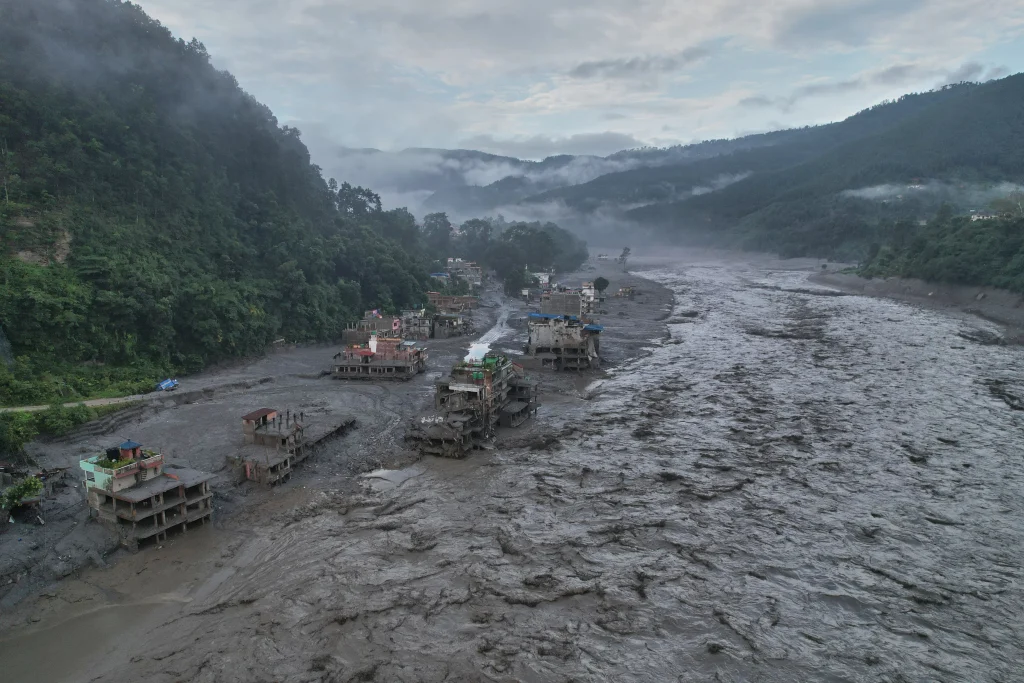
Picture from Al Zazeera
Although the upper Langtang Valley was not directly affected in the same manner as the flood-damaged corridor and settlements, the disruption to access created a serious challenge for the entire tourism ecosystem.
A trekking destination is more than its mountains. It is the road that brings visitors, the porter carrying their luggage, the lodge preparing their meals, the guide sharing stories, the shopkeeper selling supplies and the family waiting for the next trekking season.
When access disappears, the impact reaches far beyond the damaged bridge.
The September reporting on the flood described the disruption of transport and supplies to Langtang, highlighting the vulnerability of communities that depend on the corridor.
This is why the reopening of the trekking route is not merely a travel update. It is an important part of the region’s recovery.
Langtang Valley That Has Already Rebuilt Itself Once
For many people, the name Langtang carries memories of the devastating 2015 earthquake in Nepal.
On April 25, 2015, the Gorkha earthquake and the resulting avalanche devastated the original Langtang village. The disaster changed the landscape, took lives and left families grieving. Entire communities experienced loss, and the valley became one of the most deeply affected areas of the earthquake.
Langtang’s story was not only about destruction. It was also about rebuilding.
In the years following the earthquake, local people began rebuilding their homes, lodges, livelihoods and communities. The trekking trail gradually returned. Guesthouses reopened. Visitors came back. Guides resumed their work, local businesses began operating again, and the valley slowly found its way back into Nepal’s trekking map.
The rebuilt Langtang village, situated on higher ground, became a symbol of resilience and the determination of local people to continue living in their ancestral homeland.
Tourism played a meaningful role in that recovery.
Trekking visitors helped bring income into the region. They stayed in lodges, bought meals, hired guides and porters, purchased local products and supported businesses that had been rebuilt through years of effort.
Langtang did not recover overnight. Its recovery was made possible by a combination of community strength, assistance, rebuilding efforts, infrastructure development and the return of visitors.
And now, following the 2026 flash flood, the region is once again facing the challenge of rebuilding and adapting.
It is heartbreaking to see a place that has already experienced such immense loss face another disaster. But the story of Langtang is also a reminder that people are not defined by the disasters that strike them.
The valley continues to stand. Its people continue to work. And the trails continue to offer a way forward.
The Updated Langtang Valley Trekking Route After the Flash Flood
The updated access route to Langtang Valley is through Dhunche and Thulo Syabru, rather than relying on the old Syabrubesi starting point.
Following the flood damage, the traditional route through Syabrubesi was disrupted. Alternative access routes were developed and repaired with the participation of local communities and authorities.
The route reported reopened in October follows the corridor from Dhunche through Thulo Bharkhu, Sano Bharkhu, Brabal and Thulo Syabru, then connects through Pahiro, Bamboo, Rimiche and Lama Hotel before continuing to Langtang Village and Kyanjin Gompa.
The updated route should be treated as a current alternative, not a permanent guarantee. Conditions may change due to weather, further landslides, river conditions, road repair and local safety assessments.
Langtang Valley Trek via Thulo Syabru : Itinerary
The following is a sample itinerary. Walking times and overnight stops may change depending on the exact access point, local trail conditions, weather, fitness and lodge availability.
Day 1: Kathmandu to Thulosyabru
Travel from Kathmandu to Dhunche by road. Confirm the road’s condition, vehicle endpoint and any onward transport arrangements.
Follow the alternative trail through the mountain villages, with the actual walking stage determined by local conditions and accommodation availability.
Day 2: Thulo Syabru to Lama Hotel via Bamboo
Continue along the connecting trail towards Bamboo, following the route confirmed by your local guide.
Trek through forested landscapes and mountain terrain towards Lama Hotel.
Day 3: Lama Hotel to Ghodatabela to Langtang Village
Continue uphill towards the alpine landscape and Langtang Village.
Day 4: Langtang Village to Kyanjin Gompa
Trek towards Kyanjin Gompa and enjoy the Himalayan scenery.
Day 5: Acclimatisation and exploration at Kyanjin Gompa
Enjoy a rest day, explore the village or undertake an optional viewpoint hike, depending on conditions and your fitness.
Day 6: Kyanjin Gompa to Lama Hotel
Descend through the upper valley along the confirmed trail.
Day 7: Lama Hotel towards Bamboo and Thulo Syabru
Retrace the route or follow the return trail confirmed by your guide, depending on current access arrangements.
Day 8: Thulo Syabru to Dhunche and Kathmandu
Return to the road access point using the confirmed route and continue towards Kathmandu. The return may require additional time or a separate overnight stop depending on conditions.
This itinerary is an illustrative trekking plan, not a guarantee of daily trail access. We can customize the itinerary according to your pace.
Why the Langtang Valley Trek Is Still Worth Visiting
The Langtang Valley Trek has always been one of Nepal’s most beautiful trekking experiences. Its accessibility from Kathmandu, rich cultural heritage, spectacular Himalayan scenery and diverse landscapes make it an exceptional destination.
The recent disaster does not erase the valley’s beauty. Nor does it erase the work, hospitality and commitment of the people who continue to live there.
1. Spectacular Himalayan mountain views
Langtang offers breathtaking mountain scenery, including Langtang Lirung and surrounding peaks.
The landscape changes throughout the trek. Forested trails of Langtang national park, open alpine meadows, mountain villages, glaciers and wide valleys create a journey that is both visually rewarding and culturally enriching.
The upper valley near Kyanjin Gompa is particularly memorable, offering an opportunity to experience the Himalayas without travelling to the more distant trekking regions of Nepal.
2. A trekking destination close to Kathmandu
Langtang is among the relatively accessible Himalayan trekking destinations from Kathmandu.
The journey does not require a domestic flight to reach the traditional trekking area. Road access is available, although the current flood-related changes require travellers to plan their transportation carefully.
For trekkers with limited time in Nepal, Langtang remains an attractive destination when access and conditions are suitable.
3. Tamang culture and hospitality
Langtang is home to communities with rich Tamang cultural traditions.
Trekking through the region provides an opportunity to experience local hospitality, traditional architecture, cultural practices, food and everyday life in mountain settlements.
Visitors should approach the experience with respect, understanding that these villages are living communities, not simply stops on a trekking itinerary.
4. Beautiful forest and alpine landscapes
The Langtang route offers a diverse natural environment, including forests, rivers, hillsides and alpine terrain.
Trekkers may encounter changing vegetation, wildlife and landscapes as they gain altitude. The natural surroundings are an important part of the trekking experience, and visitors should follow park regulations and responsible trekking practices.
5. A meaningful trekking experience
This year, trekking in Langtang carries an additional meaning.
Visitors have the opportunity to experience the Himalayas while contributing to local economic activity in a region affected by disaster.
A responsible trekking journey can support accommodation providers, guides, porters, restaurants, transport operators, local shops and other businesses.
It is not a replacement for formal disaster recovery or infrastructure investment. But tourism can contribute to livelihoods and help communities maintain the economic activity that sustains them.
Why Booking the Langtang Valley Trek After Flash Flood ?
There is a difference between visiting a destination because it is beautiful and visiting a destination at a moment when your presence can also support its recovery.
Langtang is currently facing the latter situation.
The flood-related damage to the region’s access infrastructure has affected the flow of visitors, transport, supplies and tourism activity. While the trekking route has been reported open through the alternative access corridor, the recovery of tourism businesses will take time.
Many families in the region rely on trekking tourism for their income. The return of visitors can help them rebuild their economic stability.
Tourism supports local livelihoods
Trekking tourism in Langtang involves many people beyond the guide who accompanies you.
A single trekking journey may support:
- Local teahouses and lodges.
- Family-owned restaurants.
- Local trekking guides.
- Porters.
- Transport operators.
- Village shops.
- Farmers and food suppliers.
- Local artisans and small businesses.
- Community-based accommodation providers.
When a trekker books a trip, their spending is distributed throughout the tourism supply chain. The money spent on meals, accommodation, transportation, guides, porters and other services can help local people sustain their businesses and livelihoods.
This is particularly important when visitor numbers have been affected by a disaster and businesses are trying to recover.
Your booking can contribute to the recovery of tourism
We believe trekking is more than walking through mountains.
It is an exchange between travellers and the communities that welcome them. Visitors experience landscapes, cultures and hospitality, while local communities earn income through the services they provide.
When you book a Langtang trek during this recovery period, you help create economic activity in the region.
Your journey may support the guide who accompanies you, the family who prepares your meals, the lodge that provides accommodation, the porter who carries your belongings and the transport operator who helps you reach the trail.
No single trekker can rebuild an entire region. But a steady return of responsible tourism can contribute to the livelihoods of many families.
And sometimes, the most meaningful way to show solidarity with a destination is to visit it responsibly, rather than only sharing images of its destruction.
Is It Safe to Trek Langtang Valley After the Flash Flood?
The Langtang Valley and Kyanjin trekking areas have been reported open following the flood, with alternative routes repaired and access arrangements established. However, reopening does not mean that every section of the route is free from hazards.
The Himalayas are a dynamic environment. Floods, landslides, rockfall, snowfall, road damage, trail erosion and changing weather conditions can affect trekking routes.
The alternative trail may also differ from the old route in terms of terrain, elevation gain, walking time and available facilities.
Check the latest trail conditions before departure
The information available online may become outdated quickly.
Before travelling, confirm:
- The road access from Kathmandu to Dhunche.
- The onward access from Dhunche to Thulo Syabru or the current road endpoint.
- The condition of the alternative trail.
- Whether any sections have been restricted.
- Accommodation availability.
- Current weather conditions.
- Local advice from authorities and guides.
Trek with a guide familiar with the updated route
A local guide who has recently travelled the updated route can provide practical information about trail conditions, navigation, accommodation and changes to the itinerary.
Guides are also familiar with the region’s culture, geography and trekking practices, which can make the experience more informative and comfortable.
Following a disaster, having someone familiar with the trail is especially valuable because older route information may no longer be reliable.
Allow flexibility in your itinerary
Do not plan your trekking journey with no room for delays.
The alternative route may involve additional walking, changes to transportation or adjustments to overnight stops. Weather and road conditions may also affect your return journey.
A flexible itinerary is more responsible than trying to complete a trek according to a rigid schedule.
Respect local instructions
If local authorities, park officials, guides or communities advise against travelling through a particular section, follow their guidance.
Avoid damaged bridges, unstable slopes, riverbanks during hazardous conditions and restricted areas.
The purpose of trekking is to enjoy the mountains responsibly, not to take unnecessary risks.
What Should You Know Before Booking the Langtang Valley Trek?
The updated route requires some additional planning compared with the traditional Syabrubesi approach.
Trekking permits
The Langtang Valley Trek is within Langtang National Park. Trekkers should arrange the required park entry permit and confirm any applicable trekking documentation with their trekking operator before departure.
Permit requirements, charges and documentation can change, so verify the latest official requirements before travelling.
Transportation
The traditional transportation arrangements to Syabrubesi may no longer be applicable for the affected route.
The current approach is arranged through the available access corridor towards Dhunche and onward through the alternative route. Road conditions, the endpoint for vehicles and onward walking arrangements may change.
Private vehicles can offer more flexibility for adapting the itinerary, particularly when road access is variable.
Accommodation
The Langtang Valley has trekking lodges and teahouses along the established trekking corridor. Availability may vary by season, route and the effects of recent disruption.
Booking accommodation in advance is helpful, particularly for groups or travellers with a fixed itinerary.
Physical preparation
The trek involves walking in mountainous terrain, ascending to high altitudes and spending multiple days on the trail.
Trekkers should prepare through regular walking, cardiovascular exercise and suitable footwear. A realistic itinerary with acclimatisation time is essential.
Travel insurance
Travel insurance should cover trekking activities at the altitude planned for the trip and include appropriate emergency evacuation coverage.
Read the policy carefully before purchasing, particularly regarding altitude limits, trekking exclusions and emergency evacuation provisions.
Responsible Trekking in Langtang: How Visitors Can Help
Visiting a disaster-affected region requires more than enthusiasm for adventure.
Responsible trekking means understanding the situation, respecting local people, making thoughtful decisions and ensuring that the journey does not place unnecessary pressure on communities.
- Choose locally operated trekking services
- Spend locally
- Respect the community
- Avoid turning disaster into entertainment
- Follow environmental guidelines
- Support local guides and porters fairly
The Mountains Are Still Calling: Let Langtang Valley Begin Its Next Chapter
Langtang has experienced loss before. The 2015 earthquake changed its landscape and took lives, but the people of Langtang rebuilt their homes, their villages and their livelihoods. They welcomed trekkers again, and the valley slowly returned to the place it had always been in the hearts of those who knew it.
The recent flash flood has brought another challenge to the region. It has disrupted access, affected infrastructure and created uncertainty for families and businesses that depend on tourism.
Yet the alternative trekking route has been repaired and reopened through the efforts of local people and authorities. The trail is once again accessible under current conditions, and the communities of Langtang are preparing to welcome visitors.
We do not believe that every traveller must visit a disaster-affected destination. Safety, responsible travel and informed decisions always come first.
But if you have been dreaming of trekking in Langtang, if you have been waiting to explore the Himalayan mountains, if you have been planning to experience the culture, landscape and hospitality of this beautiful valley, now is a meaningful time to consider the journey.
Travel responsibly. Book thoughtfully. Respect the community. Follow the updated route. Listen to your local guide. And remember that the mountains are not just a destination; they are home to the people who live beneath them.
The Langtang Valley Trek is more than a Himalayan adventure. It is a journey through a landscape of resilience, a community that continues to rebuild and a destination whose future is connected to the return of responsible tourism.
The trail is open. Langtang is ready to welcome you again.
Trek Langtang Valley with Adventure Himalaya Nepal
At Adventure Himalaya Nepal, we believe responsible tourism can make a meaningful difference when it works in partnership with local communities.
We are committed to providing travellers with updated trekking information, responsible trekking arrangements, local guides, thoughtful itineraries and the support needed to experience Nepal’s mountains with care.
Following the recent flood, we are updating our Langtang Valley trekking arrangements according to the available route and local conditions.
Our team can help you arrange:
- Updated Langtang Valley Trek itineraries.
- Transportation from Kathmandu to the current trail access point.
- Local trekking guides.
- Accommodation along the trekking route.
- Trekking permits and logistical support.
- Flexible trekking itineraries.
- Responsible trekking experiences in the Langtang region.
If you are planning to trek Langtang Valley in 2026 or 2027, contact Adventure Himalaya Nepal to confirm the latest route, access conditions and trekking arrangements.