

The Annapurna Circuit Trek stands as one of the world’s most celebrated long-distance treks, offering an unmatched journey through dramatic ecological zones, ancient cultures, and some of the highest peaks on Earth. Circling the majestic Annapurna massif in Nepal’s Annapurna Conservation Area, this classic route takes trekkers from lush subtropical river valleys along the Marshyangdi River, through traditional Tibetan-Buddhist villages, over the iconic Thorong La Pass at 5,426 meters, and down into the arid landscapes of the Kali Gandaki Gorge before ending near the serene shores of Phewa Lake in Pokhara.
This carefully designed 13-day Annapurna Circuit Trek itinerary (12 nights/13 days) by Adventure Himalaya Nepal balances gradual acclimatization, cultural immersion, and world-class mountain scenery. Starting and ending in Kathmandu, the route prioritizes safety with a dedicated rest day in Manang, the scenic high trail via Ghyaru and Ngawal, and professional support from licensed guides and porters. Whether you are a first-time Himalayan trekker or an experienced hiker seeking diversity, this day-by-day guide with altitudes, walking times, and key highlights will help you prepare fully for the adventure of a lifetime.
Why Choose a 13-Day Annapurna Circuit Itinerary?
Many operators offer shorter or longer versions of the circuit. A well-paced 13-day program strikes the ideal balance: enough time for proper acclimatization to minimize the risk of Acute Mountain Sickness (AMS), inclusion of the most scenic high trails, and a comfortable finish with time in Pokhara. Rushing the itinerary increases altitude-related risks and reduces enjoyment of the cultural and natural highlights. Our itinerary includes built-in rest, active acclimatization hikes, and the classic counter-clockwise direction that allows gradual elevation gain toward Thorong La.
Key features of this 13-day Annapurna Circuit itinerary include:
- Maximum altitude of 5,426 m at Thorong La Pass
- Gradual ascent with a full acclimatization day in Manang (3,540 m)
- Scenic high route through Upper Pisang, Ghyaru, and Ngawal
- Visit to the sacred Muktinath Temple
- Soaking in Tatopani natural hot springs
- Professional logistics, permits (ACAP and TIMS), and teahouse support handled by Adventure Himalaya Nepal
Best seasons are March to June and September to November, when skies are clearer and trails are in good condition.
Day-by-Day Annapurna Circuit Trek Guide
Day-by-day Annapurna Circuit Trek Guide by Adventure Himalaya Nepal are as follows:
Day 1: Arrival in Kathmandu (1,350 m)
Upon landing at Tribhuvan International Airport in Kathmandu, a representative from Adventure Himalaya Nepal will greet you and transfer you to your hotel in the lively Thamel area. After a long flight, the day is dedicated to rest and recovery. In the evening, join a welcome briefing covering the upcoming trek details, gear check, and safety protocols. Enjoy an authentic Nepali dinner and explore Thamel’s bustling streets if energy allows. Overnight in a comfortable hotel.
Highlight: Smooth airport transfer and orientation that sets a confident tone for the adventure ahead.
Day 2: Kathmandu Sightseeing and Trek Preparation (1,350 m)
Spend the day immersing yourself in Kathmandu’s rich cultural heritage with a guided tour of key UNESCO World Heritage Sites. Visit the sacred Pashupatinath Temple (a major Hindu pilgrimage site), the ancient Buddhist stupa of Boudhanath, and the iconic Swayambhunath (Monkey Temple) overlooking the valley. Meanwhile, the operations team finalizes your Annapurna Conservation Area Permit (ACAP) and Trekkers’ Information Management System (TIMS) card. Use the afternoon for last-minute shopping or gear rental in Thamel. Overnight in Kathmandu.
Highlight: Cultural immersion that provides valuable context for the Tibetan-Buddhist and Hindu influences you will encounter on the trail.
Day 3: Drive from Kathmandu to Dharapani (1,960 m) – 8–10 hours
An early start takes you westward along the scenic Prithvi Highway, following the Trishuli and then Marsyangdi rivers. The journey passes terraced hillsides, rural villages, and lively market towns. After reaching Besisahar, the road becomes rougher as you continue by private 4WD vehicle into the Annapurna region, arriving in Dharapani by evening. This drive shortens the traditional lower walking sections while still delivering beautiful valley scenery. Overnight in a teahouse.
Altitude gain: From 1,350 m to 1,960 m
Highlight: Transition from urban Kathmandu into the foothills of the Himalayas and the start of the Marshyangdi Valley.
Day 4: Trek from Dharapani to Chame (2,670 m) – 5–6 hours
The first proper trekking day begins along the Marshyangdi River. The trail climbs gradually through stone villages such as Bagarchhap and Timang, crossing suspension bridges and passing prayer wheels and mani walls. Early views of Manaslu and Annapurna II appear as the landscape shifts from subtropical forests toward pine woodlands. Chame, the administrative headquarters of Manang District, offers comfortable teahouses and a sense of entering the high Himalayan zone. Overnight in Chame.
Altitude gain: Approximately 710 m
Highlight: First clear Himalayan panoramas and introduction to local Gurung and Tibetan-influenced culture.
Day 5: Trek from Chame to Upper Pisang (3,300 m) – 5–6 hours
Today’s trail becomes more dramatic. Walk through dense pine forests, cross the river, and confront the striking curved rock face of Paungda Danda, revered by locals. The valley opens into the arid trans-Himalayan zone. Choose the higher route to Upper Pisang, an authentic Tibetan-style village with flat-roofed stone houses and outstanding views of Annapurna II and surrounding peaks. Overnight in Upper Pisang.
Altitude gain: Approximately 630 m
Highlight: Transition into the dry alpine landscape and the first taste of traditional high-altitude village architecture.
Day 6: Trek via Ghyaru and Ngawal to Manang (3,540 m) – 4–5 hours
This is one of the most scenic days on the entire Annapurna Circuit. Follow the elevated high trail through Ghyaru village, perched dramatically on a ridge with sweeping views across the Manang Valley and the northern faces of Annapurna III and Gangapurna. Continue past ancient stupas, fluttering prayer flags, and barley fields to Ngawal before descending gently into Manang. Arriving by early afternoon allows time to explore this important cultural and logistical hub. Overnight in Manang.
Altitude gain: Approximately 240 m (with intermediate higher points for acclimatization)
Highlight: Unobstructed panoramic views and authentic cliffside Tibetan-Buddhist settlements — a major reason many trekkers prefer well-designed itineraries that include the high route.
Day 7: Manang Acclimatization Day in Manang (3,540 m)
Rest days are essential for safe high-altitude trekking. Follow the proven “climb high, sleep low” principle with an active morning hike to Gangapurna Lake (around 3,600–3,900 m) or a nearby viewpoint. The short walk offers beautiful glacial lake scenery and helps your body adapt. In the afternoon, attend the free Himalayan Rescue Association (HRA) lecture on altitude sickness prevention if available. Explore Manang’s bakeries, monasteries, and traditional stone architecture against the backdrop of Annapurna III and Gangapurna. Overnight in Manang.
Highlight: Critical acclimatization that significantly improves success rates for the Thorong La crossing two days later. Do not skip this day.
Day 8: Trek from Manang to Ledar (4,200 m) – 5–6 hours
Leave the relative comfort of Manang and ascend steadily above the treeline through alpine scrub, juniper meadows, and open wilderness. Cross the Jarsang Khola via a wooden bridge and watch for Himalayan blue sheep (bharal) and golden eagles. The landscape becomes more barren and windswept. Ledar serves as a comfortable high-altitude staging point. Maintain a slow, steady pace and stay well hydrated. Overnight in a teahouse.
Altitude gain: Approximately 660 m
Highlight: Entry into true high alpine terrain with increasing mountain presence and wildlife sightings.
Day 9: Trek from Ledar to Thorong Phedi (4,450 m) – 4–5 hours
A shorter, measured day allows recovery and energy conservation before the big pass crossing. Navigate moderate scree slopes and cross a suspension bridge toward the base of Thorong La. Many groups continue a little higher to High Camp (around 4,850 m) if conditions and group fitness allow, though Thorong Phedi remains a solid option. Review gear (headlamps, microspikes if needed), hydrate thoroughly, and rest early. Overnight at Thorong Phedi or High Camp.
Altitude gain: 250–400 m depending on overnight choice
Highlight: Final preparation and the dramatic approach to one of the world’s highest trekking passes.
Day 10: Cross Thorong La Pass (5,426 m) and Trek to Muktinath (approx. 3,800 m) – 8–9 hours
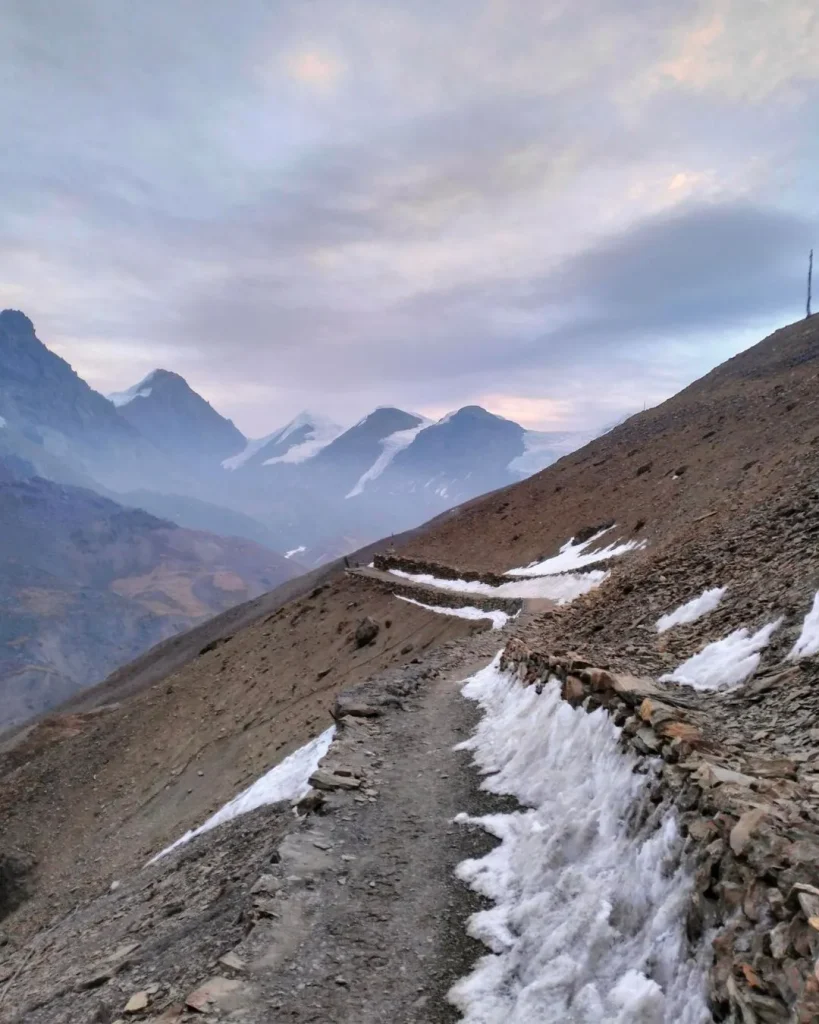
This is the defining day of the Annapurna Circuit Trek. Rise well before dawn (typically 3–4 a.m.) for an early alpine start under headlamp light. The steep, often icy ascent rewards persistence with a spectacular sunrise panorama from the prayer-flag-draped summit of Thorong La Pass at 5,426 m. Enjoy 360-degree views of the Annapurna massif, Dhaulagiri range, and the Tibetan plateau. After celebration and photos, begin the long, knee-testing descent into the rain-shadow desert of Lower Mustang, arriving in the sacred town of Muktinath. Overnight in a teahouse or lodge.
Altitude profile: Ascent of roughly 1,000 m followed by a significant descent of over 1,600 m
Highlight: Standing atop one of the highest walkable passes in the world at sunrise ,the physical and emotional climax of the trek.
Day 11: Visit Muktinath and Drive to Pokhara via Tatopani and the Kali Gandaki Gorge
Begin the morning with a visit to Muktinath Temple (Chumig Gyatsa), a highly revered site for both Hindus and Buddhists. The temple complex features 108 holy water spouts and an eternal natural gas flame. After this spiritual experience, board a scenic 4WD vehicle for the dramatic drive down the Kali Gandaki Gorge — widely regarded as the world’s deepest river canyon, separating the 8,000 m giants of Dhaulagiri and Annapurna I. Stop at Tatopani for a restorative soak in the natural mineral-rich hot springs, perfect for tired muscles. Continue to Pokhara, arriving by late afternoon. Enjoy the evening by Phewa Lake with reflections of Machhapuchhre (Fishtail Peak). Overnight in a hotel in Pokhara.
Highlight: Sacred Muktinath, the world’s deepest gorge, therapeutic hot springs, and a relaxed lakeside finish.
Day 12: Drive from Pokhara to Kathmandu (6–7 hours)
A scenic drive (or optional flight) returns you to Kathmandu along the Prithvi Highway. The journey offers final views of the mid-hills and rivers. Upon arrival, transfer to your hotel. Use the afternoon for shopping, massage, or simply reflecting on the journey. A farewell dinner is often arranged. Overnight in Kathmandu.
Day 13: Final Departure from Kathmandu
After breakfast, transfer to Tribhuvan International Airport for your onward flight, carrying unforgettable memories of the Annapurna Circuit Itinerary.
Key Highlights of Annapurna Circuit Itinerary
- Crossing Thorong La Pass (5,426 m) with panoramic sunrise views
- Dramatic ecological transition from subtropical valleys to high desert
- Scenic high trail via Ghyaru and Ngawal with superior mountain vistas
- Cultural immersion in Manang and the sacred Muktinath Temple
- World’s deepest gorge (Kali Gandaki) and Tatopani hot springs
- Gradual acclimatization profile designed for safety and success
- Professional support from Adventure Himalaya Nepal’s licensed guides and porters
Practical Tips for Success on the Annapurna Circuit
- Pack layers for rapidly changing temperatures, sturdy broken-in trekking boot
- A warm sleeping bag (or rent one)
- Headlamp
- Water purification method
- Sufficient cash (ATMs become scarce higher up)
- Stay hydrated (4–5 liters daily at altitude)
- Walk slowly
- Communicate any AMS symptoms immediately
- Comprehensive travel insurance covering high-altitude helicopter evacuation is essential.
- Teahouse meals typically feature dal bhat (rice, lentils, and vegetables- unlimited refills), noodles, soups, Tibetan bread, and hot drinks that aid acclimatization.
- Facilities improve year by year but remain basic at higher elevations.
Why Trek with Adventure Himalaya Nepal?
As a government-registered local operator based in Thamel, Adventure Himalaya Nepal handles all permits, logistics, teahouse bookings, and safety protocols. Your licensed English-speaking guide manages daily navigation and cultural insights, while porters carry the main bags according to fair-wage and welfare standards. This allows you to focus fully on the experience.
The Annapurna Circuit Itinerary remains one of the most diverse and rewarding Himalayan journeys available. This 13-day Annapurna Circuit itinerary delivers the classic highlights with a strong emphasis on safety, scenery, and cultural depth. Whether you are drawn by the challenge of Thorong La, the cultural richness of Manang and Muktinath, or the sheer variety of landscapes, this route will leave a lasting impression.
Ready to embark on your own Annapurna Circuit adventure?
Contact Adventure Himalaya Nepal today to book the 13-day package, customize dates, or ask any questions about the itinerary, cost, or preparation. The mountains are waiting.
Book Your Annapurna Circuit Trek Today!!